

Travel promos live in a different world than ecommerce promos. Your inventory expires every night. A booking can get changed three times before it gets consumed. Price visibility is brutal. And the customer is usually buying a future version of themselves, which means fear, hesitation, and "I’ll decide later" are default states.
So the goal is not run discounts. The goal is to reduce uncertainty, pull demand forward when it makes sense, and protect revenue when it doesn’t. The cleanest way to do that is to use promotions like levers, each one mapped to a moment in the travel journey: discovery, consideration, booking, pre-trip, in-destination, post-trip.
If you watch how people book, the purchase is the last step. Before that they are trying to answer a few questions: is this worth it, will the timing work, can I cancel, what’s the catch, what happens if life happens. The best travel promotions make those questions easier to answer.
That’s why the strongest promotion strategies in travel usually fall into one of three buckets:
Most loyalty promotions are transactional. Spend X, get Y. Fine, but nobody tells their friends about it. A quest is different. A quest is a narrative with a finish line. It gives travelers a reason to obsess, plan, share routes, and compare notes. It’s promotion as an event.
SAS nailed this energy with its challenge tied to joining SkyTeam: fly on a set number of SkyTeam airlines within a window and earn a huge points reward. It wasn’t just the reward that mattered. It was the fact that the campaign created a game travelers could publicly attempt. People posted itineraries. Forums lit up. The marketing became self-propagating because the task itself was interesting.
You build a quest around your network:
The reward doesn’t even have to be a huge discount. It can be status, a perk, a premium add-on, lounge access, or early boarding. The key is that the campaign is easy to explain in one sentence and satisfying to complete.
Giveaways work in travel because travel is inherently aspirational. People will stop scrolling for a trip, even if they’re not ready to buy one. But most travel giveaways fail because they’re designed like fireworks. Big burst, then nothing.
This is where smaller, more targeted prizes often outperform the "win a whole vacation" headline. A giant prize attracts everyone. A targeted prize attracts the people you actually want: a weekend rail pass for two, a family day package, a guided food tour credit. Those prizes filter for intent.
Then you build the follow-up sequence:
Think about how people travel: hikers travel differently than food tourists. Families behave differently than solo travelers. Cyclists, surfers, festival people, wellness people, digital nomads. These are identity clusters. A partnership works when it makes one cluster feel seen.
A good example is the Sportihome x Decathlon-style logic: the partner isn’t random, it’s adjacent to the experience. It says, "this trip is for people like you." That’s attention that doesn’t rely on discounts. It’s narrative targeting.
You run this play when you want to:

A time limit works in travel because decision-making has inertia. People don’t want to book, then keep browsing and regret it. A clean deadline helps them stop shopping. But the deadline has to be credible.
The strong version looks like this: you run a limited window because there is a real constraint behind it. You released a seasonal allotment. You’re filling shoulder-season inventory. You have partner-funded budget. You’re protecting occupancy on a specific departure set.
In practice, the offer can be small. The conversion effect comes from the clarity, not the generosity. "Book by Sunday, get free transfers" or "Book in 48 hours, get breakfast included" often performs better than "10% off everything," because it doesn’t rewrite your price anchor and it feels like a travel-native perk.

Discounts in travel have a long memory. Once customers learn you’ll cut price, they wait. Added-value doesn’t have the same downside because it feels like an upgrade, not a markdown. That’s why BOGO works best in travel when it’s framed as more experience instead of less price. Tours, rentals, activities, rail add-ons, even hotel nights can use this.
You see this in time-based inventory especially. The pattern is basically: “Book 3 hours, get the 4th free.” The economics can look like a discount, but behaviorally it encourages a bigger commitment. Someone who was debating a short booking now rationalizes the longer one because the offer nudges them over the line.

A lot of travel hesitation isn’t about the booking price. It’s about the unknown total cost and the planning burden. Customers feel like they’re buying a trip plus a pile of hidden decisions. Arrival rewards work because they simplify the mental math. That value can be transport, dining credits, attraction passes, local merchant perks, lounge access, upgrades, whatever fits your ecosystem.
Tourism boards do this well because they can coordinate merchant networks, but operators can run a version too. Hotels can bundle breakfast, late checkout, and transit. Airlines can bundle seat selection, baggage, and lounge day access.
The mechanics also play nicely with margin:
Most brands treat flexibility as a policy buried in fine print. The smarter approach is to make flexibility visible and optional, like insurance, but less grim. The customer is already doing risk calculations in their head: If something changes, will I lose money? So give them a clean answer at the moment they’re deciding.
This is where tiered flexibility packages work. Basic fare. Semi-flex. Fully flex. Each one has clear rules: reschedule window, refund percentage, change fees, and deadlines. You’re not guessing what the customer values. You’re letting them self-select.
ItaliaRail has run flexibility-style packages where the add-on determines how much of the fare is refundable and whether rescheduling is allowed. It’s not framed like a discount; it’s framed like peace of mind, and that’s the point.

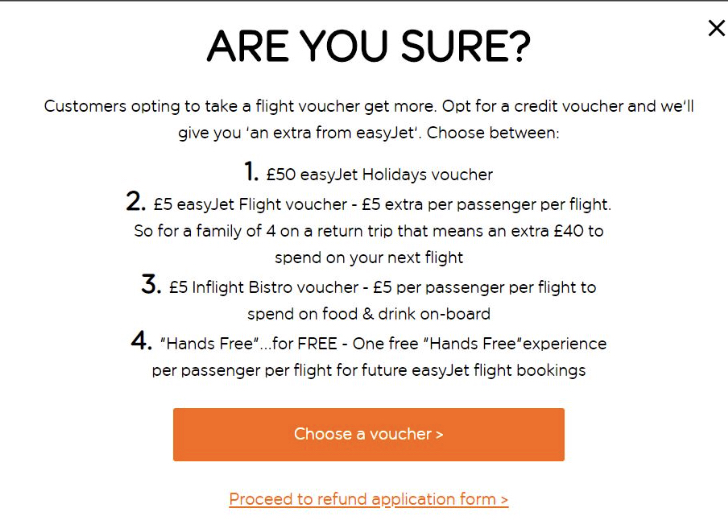
Sometimes the booking is going to change. The question is whether that change becomes a full cash refund or a retained relationship. Credit-first recovery works when it’s honest and when it’s positioned like a benefit, not a punishment. "Cancel for credit and get a bonus" can be a legitimate value exchange: you keep the customer’s money in the system, and in return you give them a bit more value and a simpler rebooking path.
This is especially effective in travel because customers don’t always want their money back. They want their trip later. They just want the friction reduced and the value protected. The line you don’t cross is coercion. If you make credit the only reasonable path, people will get angry and it will backfire. The good version offers credit as the best option, but still makes the alternative clear. It also sets tight rules: validity period, what it can be used for, whether it’s transferable, and what happens if partially redeemed.
A lot of travel abandonment isn’t they didn’t want it. It’s they weren’t ready to be locked in. So you give them a way to commit lightly.
This can look like:
These mechanics are basically foot-in-the-door for travel, but with money involved. The customer feels like they took action without fully committing to a rigid plan. That matters because travel purchases have unusually high emotional weight. People don’t want to make a mistake and then fight support.
The critical thing here is to keep it clean. If the hold feels like a trick, it turns into distrust. If the hold is too long, it creates inventory headaches. If the deposit terms are messy, your support team becomes the interpreter.

Travel promotions do three jobs. Attention gets people dreaming and talking (quests, smart giveaways, partner drops that feel like a tribe). Commitment turns intent into bookings by making the decision easier without wrecking ADR (real time-boxed offers, added-value “more trip” deals, arrival bundles). Flexibility and recovery keeps revenue intact when plans change (paid flexibility tiers, credit-first cancellation paths, short holds). The common thread is control: clear rules, caps, stacking policy, and measurement beyond bookings, so you grow demand without creating refund chaos or margin leaks.



.svg)


