

U.S. holiday sales are forecast to top $1 trillion for the first time in 2026, while online holiday spending already reached a record $257.8 billion in 2025.
So yes, there is plenty of money moving around in December. There is also plenty of promotional value being thrown at customers who need very different things depending on whether Christmas is three weeks away or three days away.
That is the part worth paying attention to as the right Christmas incentive changes as the deadline gets closer.
A six-week Christmas campaign sounds efficient. It is also a good way to end up running an offer long after the customer problem has changed.
In early December, shoppers are still exploring. By the middle of the month, decisions are being made. In the final days, inspiration matters considerably less than whether the gift can actually be delivered in time.
A promotion that understands those stages can do much more than a percentage discount left running from Black Friday until somebody remembers to switch it off in January.
Learn more: How to optimize promotions (and why most teams never actually do it)
The early Christmas shopper often has intent without a decision. They know they need gifts. They may even know who they are buying for. What they do not necessarily know is what should go in the basket. That changes the role of the incentive.
A blanket 20% discount assumes price is the thing stopping the purchase. Early in December, indecision is often the bigger problem.
That is why bundles work so naturally here. e.l.f. has leaned into holiday gift sets that package complementary products into something customers can understand as a ready-made present. The commercial value is not just the discount. The bundle reduces the effort of deciding what belongs together.
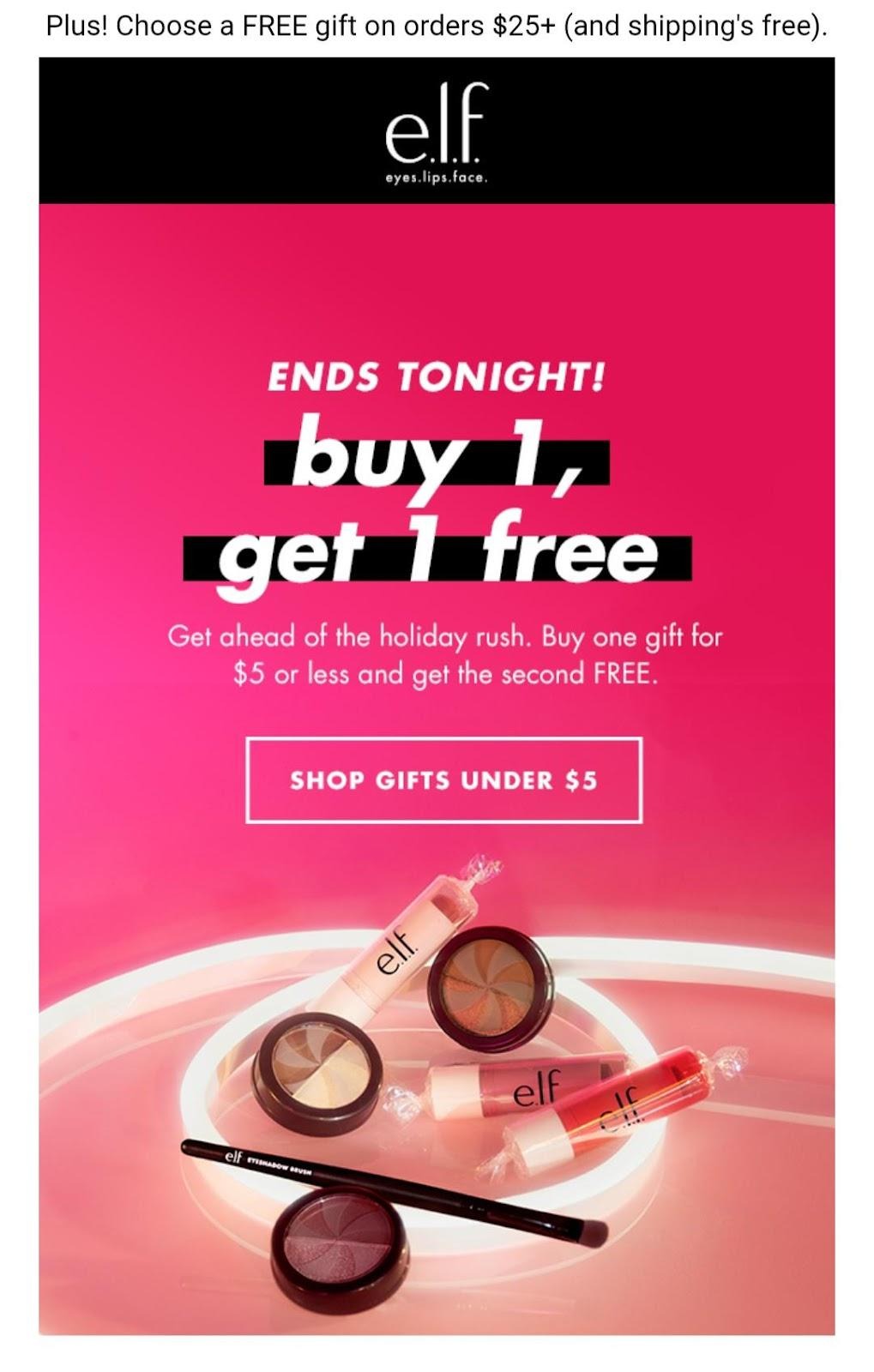
The stronger version is SKU-driven. Put a recognizable hero product in the bundle, then use complementary, higher-margin, or slower-moving products around it. The shopper gets an easier gifting decision, while the business gets more control over which products receive the promotional support.
The catch is that a gift set can look generous while quietly becoming an expensive way to move products nobody particularly wanted. Track attach rate, total bundle margin, and whether the additional products actually increased the basket.
MAC Cosmetics took a more playful route with its Falling Bubbles & Bows game. Customers clicked falling products to reveal rewards including 25% off, BOGO offers, and free products.
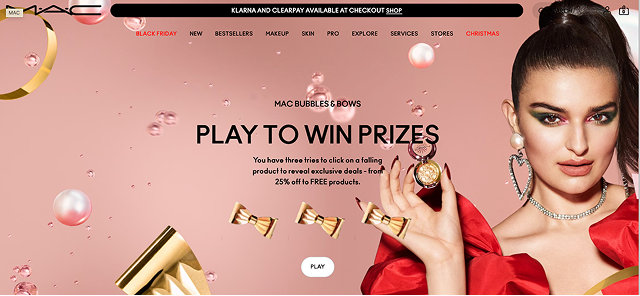
The game makes sense early in the season because customers are still open to discovery. They have not necessarily arrived looking for one specific SKU, so a bit of interaction can help move them around the assortment.
But the important part is the reward architecture underneath it. A percentage discount pushes conversion differently from BOGO. A free product can support trial. Different reward probabilities can control how much promotional value gets distributed across the audience.
That is where gamification becomes commercially interesting. The game gets attention, but the incentive still has to justify its cost.
Starbucks' Red Cup Day is another useful example because the reward does not disappear when the initial transaction ends.
In 2025, customers ordering a qualifying holiday or fall drink received a limited reusable red cup while supplies lasted. Bringing a reusable cup back later could unlock an ongoing benefit, connecting a one-day seasonal activation with future behavior.
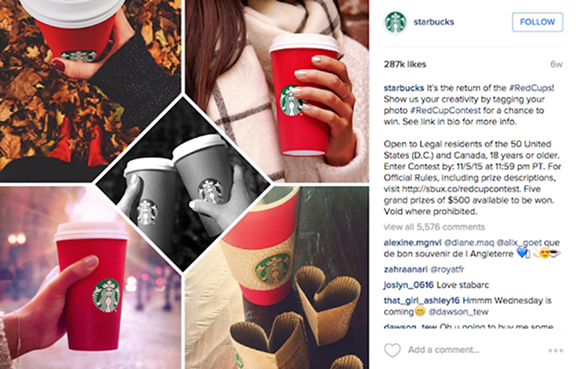
That is more useful than treating a free gift as a decorative extra. A gift with purchase can drive a specific product today, introduce something new, or create a reason to return later. The economics therefore include much more than the cost of the free item.
Inventory matters too. Once the gift runs out, the promotion has effectively changed. Your campaign logic should know that before an angry customer discovers it at checkout.
By the middle of December, a lot of the exploration is over. Customers have a better idea of what they want, which brands are still in consideration, and how much they are prepared to spend. There is still time to shop, so urgency has not yet swallowed the whole journey.
This is where access, loyalty status, recurring rewards, and value framing start doing more work.
Sephora's 2025 Holiday Savings Event gave Rouge members 20% off and earlier access, VIB members 15%, and Insiders 10%. Rouge members could also share a one-time 20% offer with a friend during the early-access period.
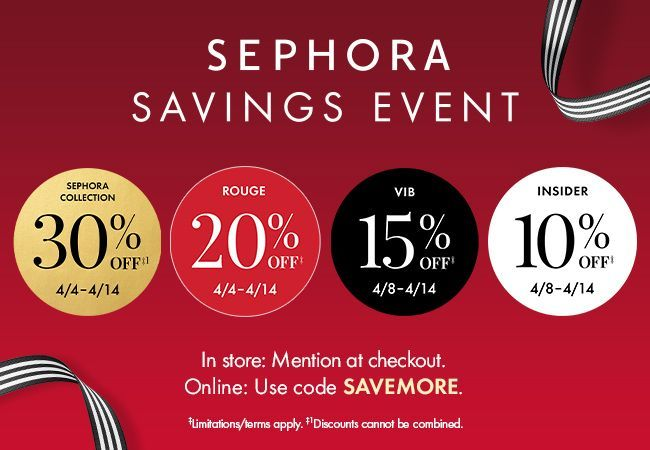
There is more going on here than “better member, bigger coupon.” Discount depth changes by tier and each benefit can influence a different behavior.
That gives the brand something worth learning from. Did early access matter as much as the additional discount? Did the referral perk bring in genuinely new customers?
Your highest-value customers are often the customers who need the least convincing. Automatically giving them the most expensive reward because they sit at the top of a loyalty program can be a surprisingly generous interpretation of loyalty economics.
M&S has used its 12 Days of M&S campaign to give Sparks members different festive rewards through its app, including free products, personalized offers, savings, and prize opportunities.
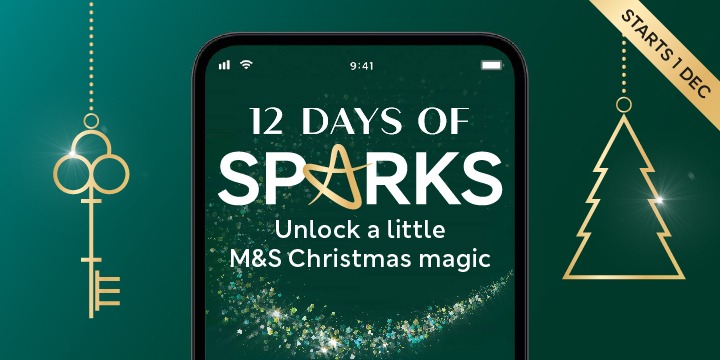
The countdown format works particularly well in the middle of the season because there is still enough calendar left for repeat engagement to matter.
One reward can encourage a store visit. Another can push product trial. Another can increase spend. The campaign does not have to make one big bet on one Christmas mechanic.
That also makes the format much more interesting from an experimentation point of view. Twelve different moments can generate much more useful signal than one coupon running for twelve days.
Estée Lauder's 2025 Holiday Blockbuster is a good example of how much work value framing can do. Customers could unlock a 12-piece Holiday Blockbuster for $90 with a qualifying purchase, with the set presented at a stated retail value of $652.
The customer is not simply receiving another percentage off. They are unlocking access to something that feels disproportionately valuable relative to the amount they are paying.
That makes the mechanic more interesting than a standard discount. The qualifying basket generates the initial purchase, while the Blockbuster creates another $90 of spend and exposes the customer to a broader range of products.
The closer Christmas gets, the less the customer needs another campaign idea. They need to know whether the problem will be solved. By the final five days, a beautifully merchandised gift bundle may matter less if it cannot arrive in time. Another loyalty multiplier is not especially comforting when the customer still has no gift for their sister.
This is where the incentive should start solving practical friction.
Target's December 2025 promotion gave Target Circle members 10% off Target GiftCards during a two-day window. Target said more than six million gift cards had been sold during the previous year's event.
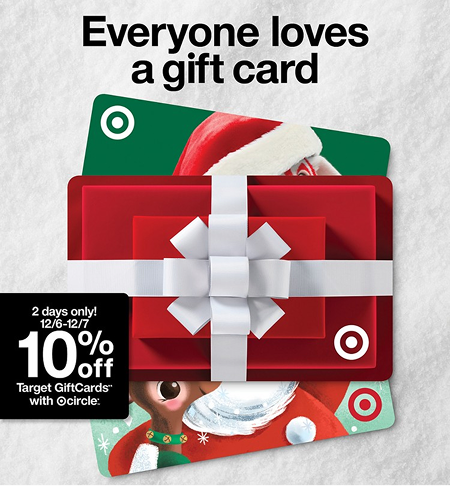
That mechanic becomes more powerful as Christmas gets closer because it solves two problems at once. The shopper does not have to know exactly what the recipient wants, and delivery risk largely disappears. Instead of buying another object under pressure, they buy choice.
There is still an incentive cost, of course. Selling $100 of future purchasing power for $90 is not free money just because there is no parcel involved.
The economics continue when the card is redeemed. Basket value, product margin, unused balance, and any promotion applied to the redemption purchase all matter. But the mechanic fits the moment because it addresses the customer’s actual problem: I still need a gift and I need certainty now.
Clarins UK made exactly that trade-off visible in December 2025.
From December 15 to 18, the brand offered free express delivery on orders of £75 or more. The qualifying threshold had to be met after loyalty rewards, promotions, and discount codes were applied, while e-gift certificates and spa vouchers were excluded.
By that point in December, another 10% off may be nice. Knowing the present will arrive is nicer. The threshold also makes the shipping incentive work harder. Clarins is removing a real late-season friction point while still asking the basket to reach a meaningful value.
Not every Christmas incentive has to be redeemed before Christmas.
Aperol's Merry Spritzmas campaign sold festive greeting cards that unlocked an e-voucher for two Aperol Spritzes at participating venues, with redemption deliberately pushed into January and February. That is a smart use of timing because the Christmas purchase solves one problem now and creates another commercial moment later.
The gift is bought during peak gifting demand, but the actual experience happens when hospitality demand looks very different. Instead of spending all the promotional value in December, part of the campaign is effectively buying future traffic.
Delayed rewards only work when redemption is extremely clear. Locations, expiry dates, eligible products, voucher limits, and availability become part of the customer experience.
But the principle is useful well beyond hospitality: Christmas demand can be used to create January behavior instead of ending at Christmas checkout.
Early December is about discovery, mid-month is about value and decision-making, and the final days are about certainty. A bundle, loyalty reward, gift card, or shipping perk only earns its cost when its eligibility rules are actually built to hand off from one phase to the next, not just retired from a deck once someone remembers to update it.
Run thresholds, reward types, bundles, and audiences against a real holdout, and judge them on contribution margin, not redemption count. Then scale what's actually incremental, cut what isn't, while there's still enough calendar left for the answer to matter.
Learn more: Why incentive optimization beats traditional promotions
Inventory caps, product exclusions, shipping regions, cutoff dates, redemption limits, and stacking rules should be defined before launch. Christmas promotions rarely fail quietly. They fail at checkout, in front of the one customer who actually took you up on the offer.
Reduce the reward once baseline conversion is already covering the sale, remove mechanics that no longer fit the moment, and shift value toward whatever friction is actually live that week. December moves quickly. Your incentive strategy should move with it, not just count down alongside it.
Bundles work. Gifts work. Loyalty rewards work. Gift cards work. Shipping perks work. None of that was ever really the question. The question is whether the mechanic in front of the customer matches the moment they're in, and a campaign trying to do all three jobs at once usually ends up doing none of them well.
That's a wrap, literally. The brands worth stealing from here didn't run one generous Christmas campaign. They knew exactly when to close one gift and open the next.


.svg)

