

In this guide, we will cover the gift card marketing strategy from ideation to implementation. We will discuss how to use gift certificates for your benefit, both in promotions and as a standalone product. We will cover the possible uses of gift cards, ideas for promoting gift card sales, UX and UI best practices and gift card campaigns inspirations.
A gift card, also known as a gift certificate, gift voucher or gift token, is a prepaid stored-value money card, usually issued by a retailer or bank, to be used as an alternative to cash for purchases within an issuing store.
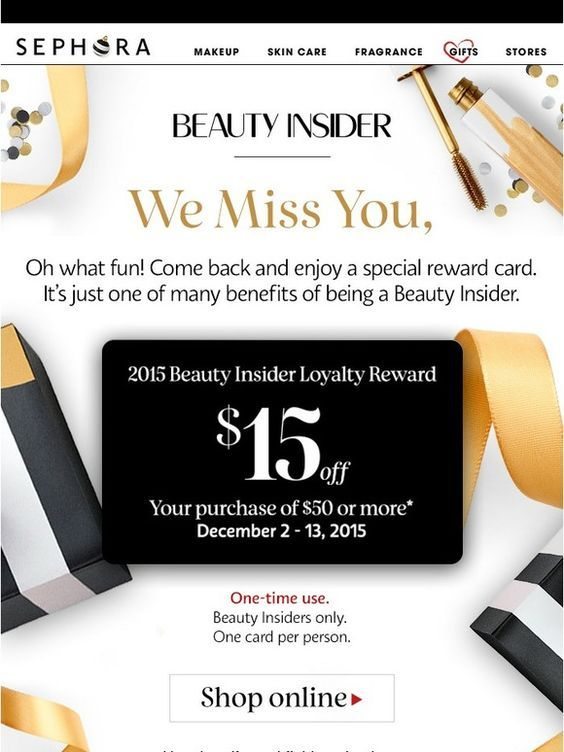
Gift card campaigns are campaigns where you give (not sell) gift cards to your customers or potential customers. For example, you could give 5$ gift cards to all new customers to encourage them to make their first purchase with you. You could also offer $10 gift cards to inactive customers to trigger re-engagement. You can send gift cards to customers on special occasions, like birthdays or anniversaries. You can also offer gift cards as a part of a loyalty program, referral program or giveaway rewards. The options are limitless.
There are two special gift card campaign trends worth paying attention to when planning your gift card strategy:
Many companies order corporate gift cards as a present for their employees or clients. They use their custom logo and sometimes branding as well. You could take advantage of this trend and offer branding and logotype options on your gift cards and market them to the B2B segment as well.
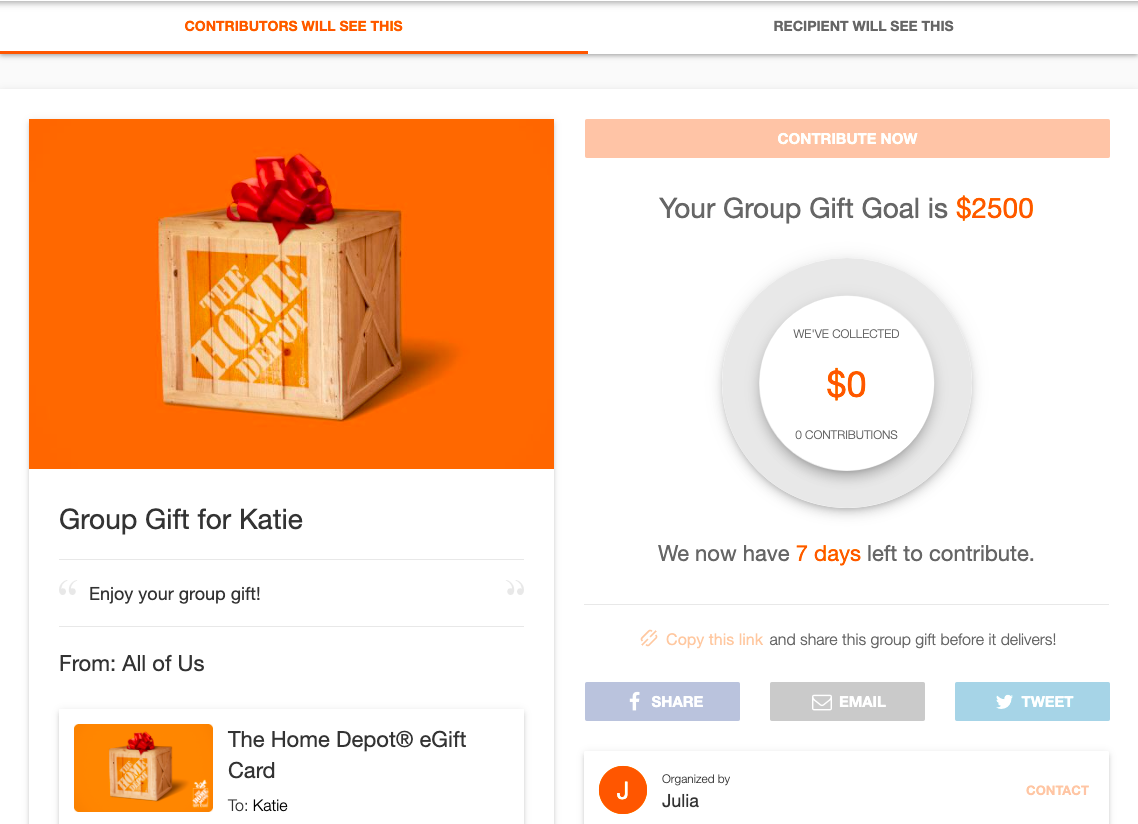
Group gifting is a relatively new trend in sales. For example, Home Depot lets customers chip in on the higher-value gift cards. Gift card contributors get a special message by email encouraging them to contribute to the gift and the recipient receives the final gift by email.
Why do gift card campaigns sometimes work better than other types of sales promotions? Getting a gift card feels like a gift making customers feel special, while offering voucher discounts or cart discounts feels like a sales promotion. Moreover, thanks to the endowment effect, customers are more likely to use a gift card to make a purchase than to use a sales promotion. As they know they have “free money” to use, it would be a “loss” not to use it, while skipping a sales promotion does not feel like “losing.”
From the retailers’ point of view, gift cards can be a cheaper incentive than, for example, free products or cashback, as many gift cards expire before being redeemed. Giving away gift cards only costs a retailer if a customer uses the incentive.
Offering gift cards as incentives to your customers can benefit you in multiple ways:
Gift cards can be sold as a separate product as people tend to buy them as a gift for their family and friends. They can be also used as an incentive in a promotional campaign, for example:
You can find some real-life examples of gift card campaigns in our blog post.
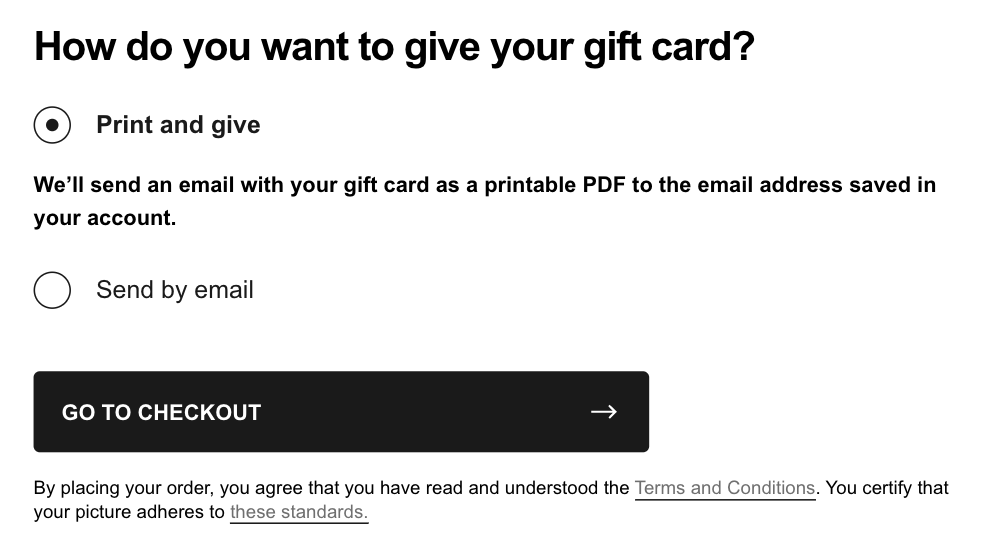
You can offer e-gift cards, paper gift cards or a mix of both (paper gift cards that can be used online as well and are available on the mobile app, for example).
Electronic gift cards or mixed (available online gift cards) have a couple of major advantages:
However, some businesses still choose to offer paper gift cards, for a couple of reasons. First of all, there are customers who prefer to use paper gift cards or are not familiar with technology and simply cannot use digital gift cards. For example, elderly, underage, or disabled people without access to technology. Second of all, a paper (printed) gift card makes a nicer gift than a digital gift card. They can be nicely wrapped up or carry a personalized message with best wishes.
We generally recommend to offer a mix of both, paper gift cards that can be accessed and tracked electronically as well and purely digital gift cards, if someone purchases them online or does not request printing them specifically. An example of such a mixed offer is Zalando’s gift cards.
There are a couple of ways you can personalize gift cards:
Personalization starts with collecting customer data and data crunching so we recommend getting a CDP or CRM in place and collecting the relevant data first. Then, you can use that data to personalize your gift card promotions using your promotion management software.
If you are planning to use gift cards as an incentive in a campaign (promotion, referral, loyalty, giveaway, etc.) you should think of adding some limits to them. This will help you protect yourself from fraud and abuse. Here are some ideas of the limitations you could implement in your gift card campaigns:
Do your gift cards have an expiration date? It can be a certain date or a certain time period, for example one year from issuing. Note! Some countries or states do not allow setting an expiration date to gift cards.
Define how many times a customer can use your gift card. Can the gift card be used only on one transaction or an unlimited number of transactions (in other words, can the leftover balance can be cashed out later)?
Usually, gift cards can be redeemed until there is positive balance left. You can treat gift cards as a payment method, not a promo voucher. This option is great if you use rechargeable gift cards. Then the balance on the card is dynamically calculated, and the credits are used as a payment method. Similar to a credit or debit card. If you opt for this solution, you need to make sure that the gift cards have no expiry date on them (or a very long one). This can make your gift cards very attractive, but at the same time, it demands a high-quality infrastructure to keep the card redeemable forever.
You can select which products and categories the gift card can be used to pay for and which should be excluded. For example, a gift card cannot be used to pay for another gift card.
You can define the minimum order volume and value the gift card can be used on, for example only on orders above $30.
Can the gift card be combined with any other offers or promotions? For example, can you pay by gift card on Black Friday when there is a site-wide promotion of 20% off?
You can limit the whole campaign budget, for example setting the maximum of 200 gift cards issued and then shutting down the campaign. You can also limit the number of gift cards to one per customer and make them non-transferrable to ensure only the person who got the gift card can use it.
What’s also important to note that the 5th Anti-Money Laundering Directive that came into force in 2020 lowered the transaction limit on prepaid cards. After the 4th AMLD cut the monthly transaction limit on anonymous prepaid cards to €250, the 5th AMLD set an even lower limit of €150– this limit also applies to the amount that can be stored or topped-up on the gift cards. The 5th AMLD limit means that it will be required to carry out identity checks on customers using prepaid cards worth more than €150. Similarly, anonymous, remote or online transaction limits are reduced to €50. This is why it’s key to always assign the cards to specific customers who are identifiable by their name or email address.
First of all, choose whom you are going to promote your gift cards to. Your loyal customers are a great place to start. Your happy customers are a logical target to be your gift card giving ambassadors.
If you want to sell gift cards as a standalone product, here are some ideas on how to promote their sales:
Whether you want to promote your gift card sales or distribute your gift cards as part of a promotion, referral, loyalty program or a giveaway campaign, there are many channels available.
You should investigate where your customers spend the most time and then try those channels. You can also try different channels, measure the success and change if needed. Of course, the preferences will depend on the customer segment so you should use different channels for different customer segments.
When it comes to promoting gift cards as a standalone product, here are some ideas:
You can expand your sales by offering your gift cards in other stores, not only your own. Make sure you negotiate where they will be displayed as this can make or break your strategy. Work only with partners whose clients would be interested in purchasing your gift cards (similar audiences).
You can use your affiliate network or influencers to sell gift cards. If you sell e-gift cards and have tracking enabled, you can check who sold how many gift cards and then you can remunerate them for the sales done.
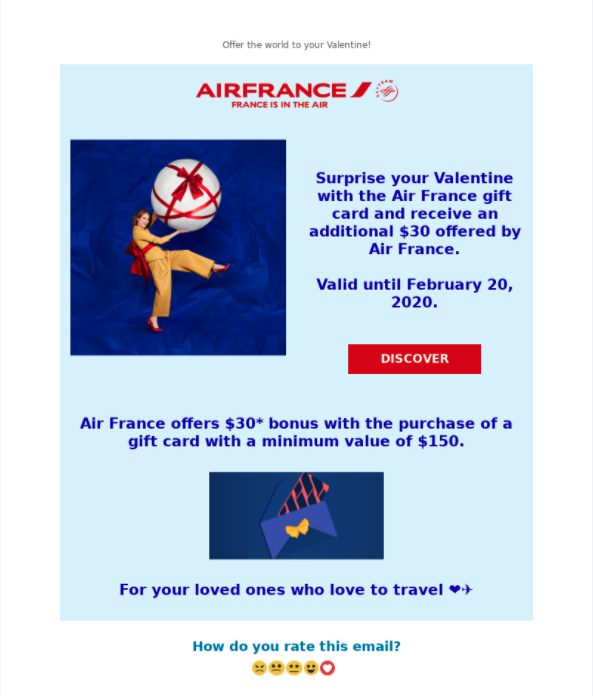
You can inform your customers about your gift cards via email. You can send it as part of onboarding for new customers, add a small advertisement in your newsletter or run special promotions on the gift cards (sales, limited edition designs etc.). Options are limitless! It is better to send emails or other communication regularly. Someone may not want to buy a gift card this month but when the holiday season comes they may be into it. Pre-holiday season is the best time to promote your gift card sales, think Easter, Christmas, Valentine’s Day and other national holidays.
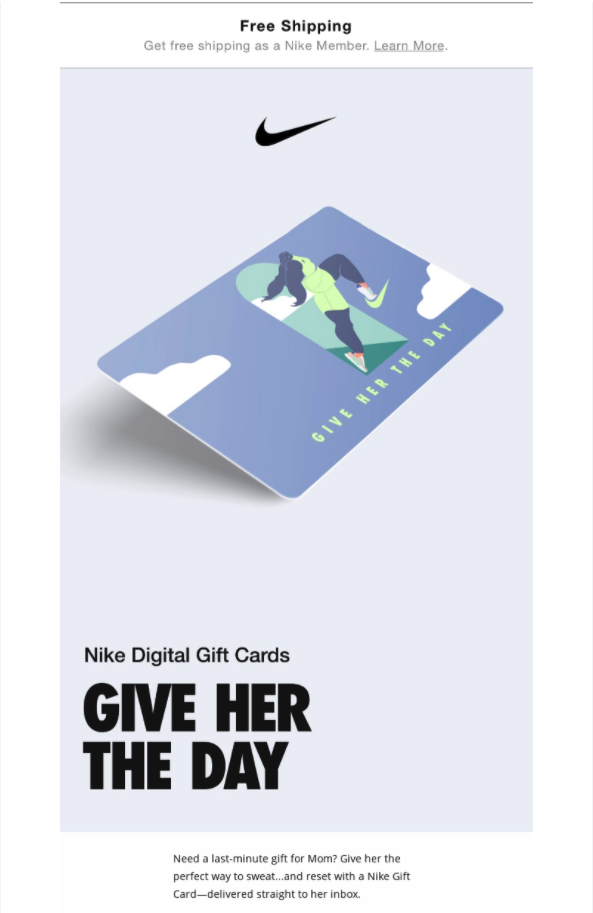
You can promote gift cards on social media, especially if they have a nice, holiday design and can fit into your content strategy. Instagram is a great place for eye-catching designs and Facebook ads can help you bring in more sales. You can even run ads among your current customers, before the holiday season. There are many possibilities and platforms, get creative and try different options to determine which works best for you
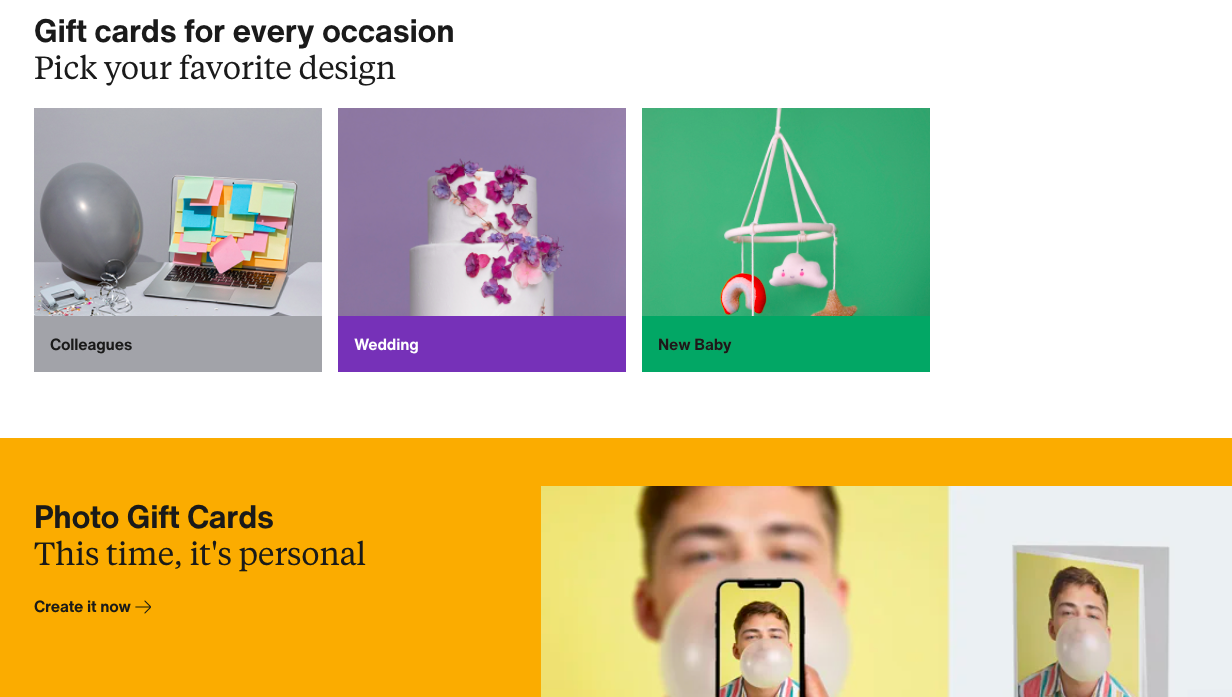
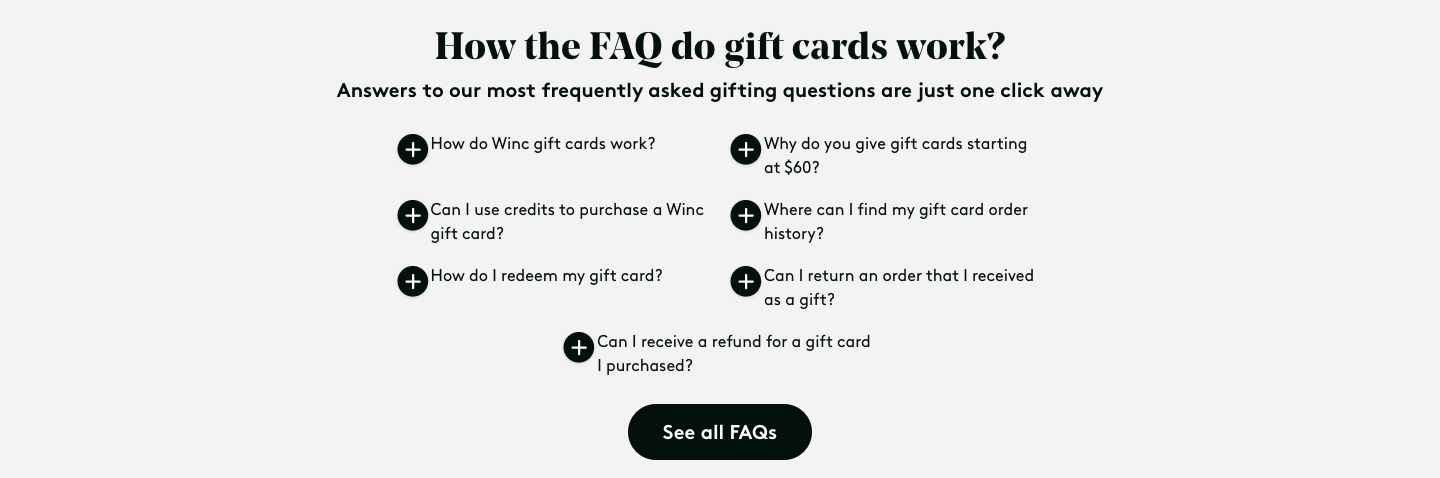
Your gift card landing page should clearly explain the available gift card options. It should showcase different card designs (if you offer many) and present different card delivery options (if you provide both email and print). It is also recommended to place some FAQ or T&C there to offer additional information to potential buyers. For example, Zalando has a dedicated landing page for promoting their gift cards. From this view, potential buyers can see all possible personalization options and choose between standard cards and gift boxes.
Winc, a wine e-commerce business, included a FAQ section on their gift card landing page with a clever copy.
You can use the landing page not only to showcase your offer but also to allow customers to check their current card balance. Some companies also use this space to let users reload the cards they already own.
Especially if you are running a promotion on the gift cards, you could place that information on your website or mobile app banners.
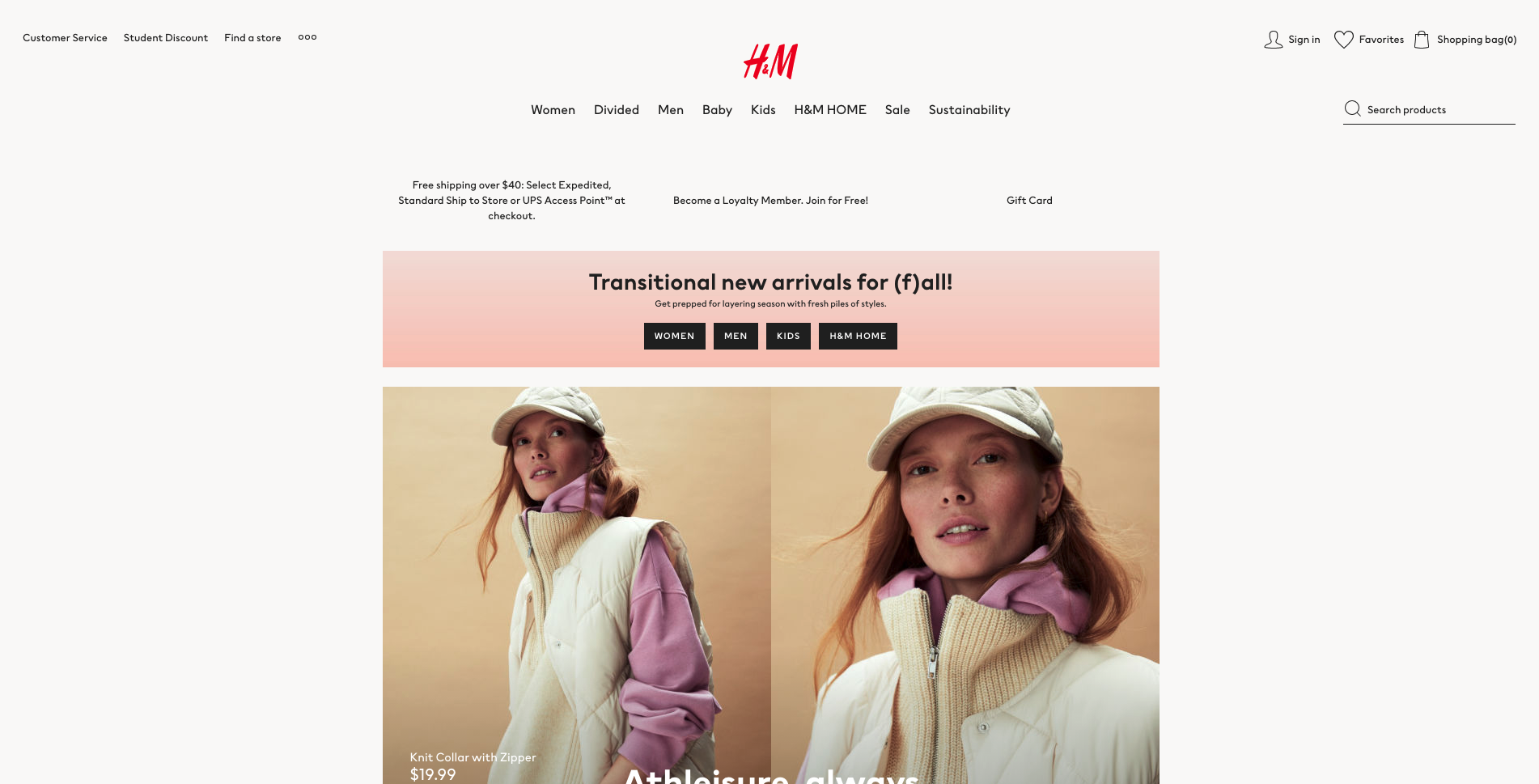
You should definitely offer gift cards at checkout, both in brick and mortar stores (checkout counter or other POS display) and in the customer basket on e-commerce sites. This is the last moment when you can convince your customers to add something more to their baskets. Gift cards are often an impulse purchase, especially around holiday season when everyone is running out of ideas for presents. Use it to your advantage and advertise them in a visible place.
Whatever channels you decide to use, keep in mind that people strive for genuinely omnichannel experience these days. It means they want a seamless journey when changing from online to offline mode. Ensure that your gift certificates work both in online and offline mode and make sure the information and visuals you are using on different platforms are consistent.
You should make it possible for your customers to check their gift card balance and expiry date. It could be an online widget, for example in the customer portal, where they could check any gift card and its data. Make sure your infrastructure is prepared for preventing cyberattacks as such widgets are susceptible to attacks and fraud.
A great gift card sales or gift card campaign strategy requires a comprehensive promotion management system that can be connected with various data sources and distribution channels. It should allow you to launch gift card campaigns at scale and track the results both on the customer and campaign level. It should manage both, online and offline gift cards, as long as the gift card code (text, barcode or QR code) is in the online system. It should allow you for testing and quickly changing the campaign settings.
The promotion management software is the base for launching effective sales promotion campaigns, including gift card campaigns. You should start with planning your requirements, finding the right software and then launching and optimizing your gift card campaigns. We hope this guide helps you go through all the phases from planning to implementation of your next successful gift card campaign or starting gift card sales.



.svg)


