

Football fans’ loyalty behaves more like a hometown than a coffee brand: inherited, irrational, and immune to the performance metrics that would sink any other business.
So the retail default (earn-burn) solves a problem clubs mostly don't have. A fan who was always going to buy the shirt doesn't need 3 000 points to do it. We've made this argument before: most programs reward a transaction that would have happened anyway. In football, that's true almost every time.
The ROI case is just as strong. Deloitte's 2026 Football Money League puts the top 20 clubs' combined revenue at €12.4 billion, Real Madrid alone cleared €1.16 billion.
So let’s look at what football loyalty programs actually get right, where they fail, and the mechanics clubs can steal without turning fan devotion into a cashback scheme.
FIFA rolled out FIFA Rewards on May 13, 2026, right in the middle of a ticketing backlash.
The program itself looked familiar enough: digital challenges, tiered benefits, FIFA Points, and a virtual “World Cup Passport.” Standard fan engagement stuff.
But the context did it no favors. In the same window:
A points scheme can't fix a pricing problem. Digital collectibles don't make up fot a seat getting impossible to afford. Fix the core relationship first, the program goes on top of it, never in place of it.
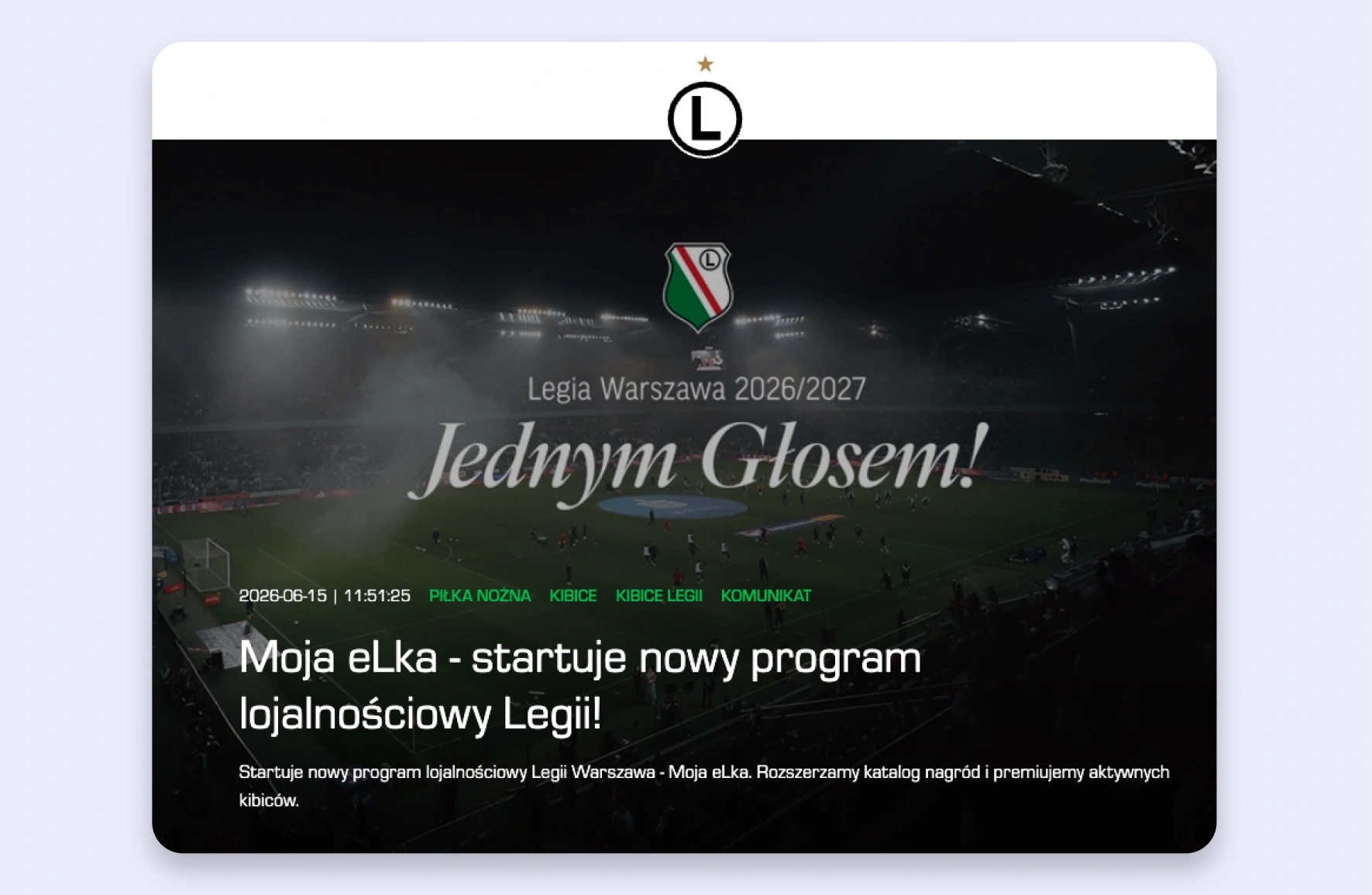
On June 15, 2026, Legia Warszawa announced Moja eLka, a new loyalty program built with Voucherify as the club's technology partner, replacing the club's long-running Legiony campaign.
Legia competes for attention against the entire entertainment market, not just rivals on the pitch, and Legiony only ever rewarded one thing: showing up to home football matches.
The team mapped out distinct fan types, the wealthy veteran who wants recognition for tenure, the remote supporter who wants to feel included from hundreds of kilometers away, the parent trying to keep a matchday outing affordable for the whole family, even the club's own marketing team, who wanted to run promotions without filing an IT ticket every time.
Each pain point got mapped to a specific answer:
The program runs on its own currency, eLki:
eLki redeem across five categories:
Currency and status run on separate tracks. Attendance builds toward badge tiers on its own, and that credit only fires when a ticket is scanned at the gate, not when it's bought, so purchasing a ticket banks eLki right away, but only showing up earns the status. A fan who can't make it to a match can put the seat back up for resale instead of leaving it empty, trading the attendance credit for a smaller eLki bonus instead.
Legia's own launch announcement boiled the whole thing down to three principles:
The program was also built around real matchday problems: long kiosk queues, empty seats, and low turnout for less popular games.
A season ticket and a single walk-up ticket should earn the same credit toward attendance-based status, whatever the price gap. Reward showing up, not what it cost to get in. The retail instinct, spend more and rank higher, is exactly the framing fans resent. Which axis you reward is a design choice, and spend is usually the wrong one.
Learn more: How tiered loyalty programs can boost your business strategy
Buying a ticket is not the same as attending a match. The cleanest structure splits the economy in two. A fan earns spendable currency the moment they buy. They earn attendance-based status only when the ticket is scanned at the turnstile.
That single rule kills a lot of bad incentives. Buying tickets and never showing up just fills a wallet instead of farming status.
A season ticket holder who can't make it can release the seat back to resale ahead of time. They bank a partial reward (say half the usual points), earn no attendance credit, and a real supporter fills the seat. Everybody wins, and nobody gets shamed for missing a game.
Subscription-based members get a stricter version of the same rule. If they don't confirm they're coming 48 hours out, the seat returns to the pool automatically: no coins, no credit, no seat.
Arriving more than 60 minutes before kickoff earns a bonus aimed straight at gate congestion. A "happy hour" bonus for concessions bought more than an hour before kickoff flattens the pre-match rush and cuts food waste. Neither behavior shows up in a standard loyalty brief, and both fix a genuine matchday headache.
Alongside the visible, progress-bar badges, run a layer of secret ones, shown only as "?" until a fan trips the condition and unlocks one. It costs nothing extra once the earn logic exists, and it manufactures the "wait, what did I just get" moment fans screenshot unprompted. The surprise lands because the trust is already there.
Learn more: Loyalty program gamification: benefits and strategies
Tier status and badge-gated rewards reset to zero each season, so this year's most engaged fan earns this year's recognition instead of coasting on five-year-old attendance. But every badge a fan ever earned stays on their profile permanently, timestamped. The reset keeps status current; the permanent record respects the veteran. Both matter.
Start from personas, not products. The 20-year season ticket holder wants recognition, not another discount. The traveling ultra would rather fund matchday choreography than redeem a voucher. The VIP wants access money can't buy. One rewards catalog, deliberately stocked so each of them finds something aimed squarely at them.
Inviting a friend earns both people currency the moment it converts, plus a one-time badge for whoever lands their first successful referral. It turns the existing fan base into an acquisition channel without touching the marketing budget, and it's one of the few mechanics on this list that grows the audience instead of just retaining it.
Not everything in the catalog should work the same way. Tickets, food, and merchandise stay cash-only, with cashback flowing back as currency. Rare experiences and partner vouchers go points-only, gated behind a minimum badge tier so they feel earned.
A middle tier lets a fan pay with either, and the app deliberately shows only the points price there, so browsing the catalog still feels like a rewards experience instead of a second storefront.
Skip migrating legacy point balances entirely: a clean reset beats importing inflated old balances that distort the economy from day one. Go mobile-only instead of building a web portal nobody will maintain well. And run the loyalty logic on an external engine instead of building one in-house.
Building out the activity list? Here are eight more incentives worth adding, and the behavior each one actually targets.
Theory is cheap. Here's how actual clubs put these ideas to work, and the one thing each one nails.
The first Premier League club-wide loyalty programme, launched in 2021. Members earn points for buying tickets, attending at Emirates Stadium, and playing trivia, polls, and predictors, then spend them on money-can't-buy experiences like a training-ground tour with a club legend or a seat at Arteta's post-match press conference.
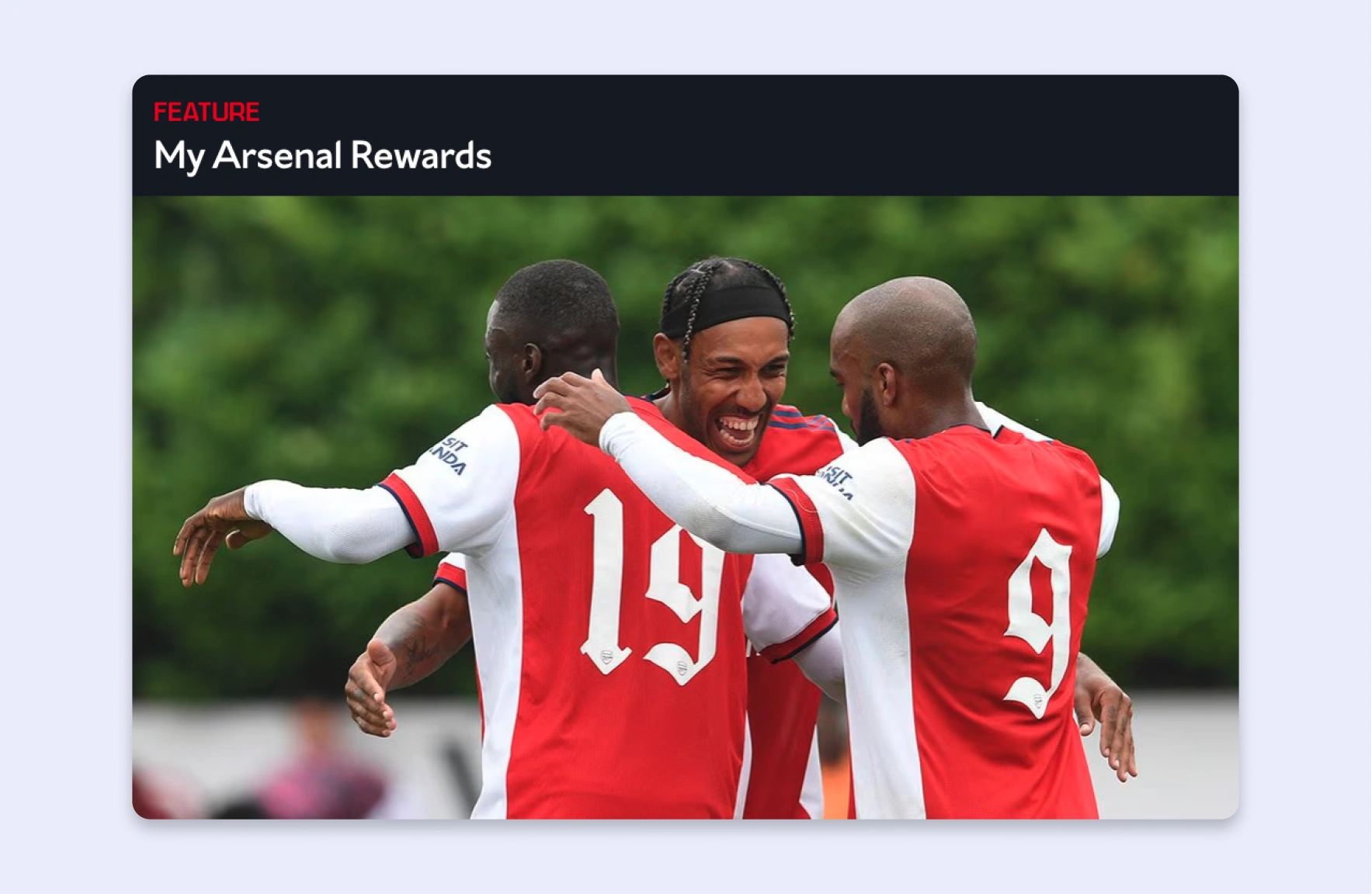
Best feature: the membership card doubles as an e-ticket, a rewards card, and a Visa payment card, so everyday spending at the club and selected affiliates earns points automatically.
Steal this: points can be spent in a marketplace, an auction, or a prize draw, three different redemption routes for three different types of fan.
A masterclass in decoupling status from spend, forced by scarcity: Stamford Bridge is the smallest of the traditional top-six grounds, so demand routinely dwarfs supply. Points are awarded for attending, not just buying, and they reset every season.
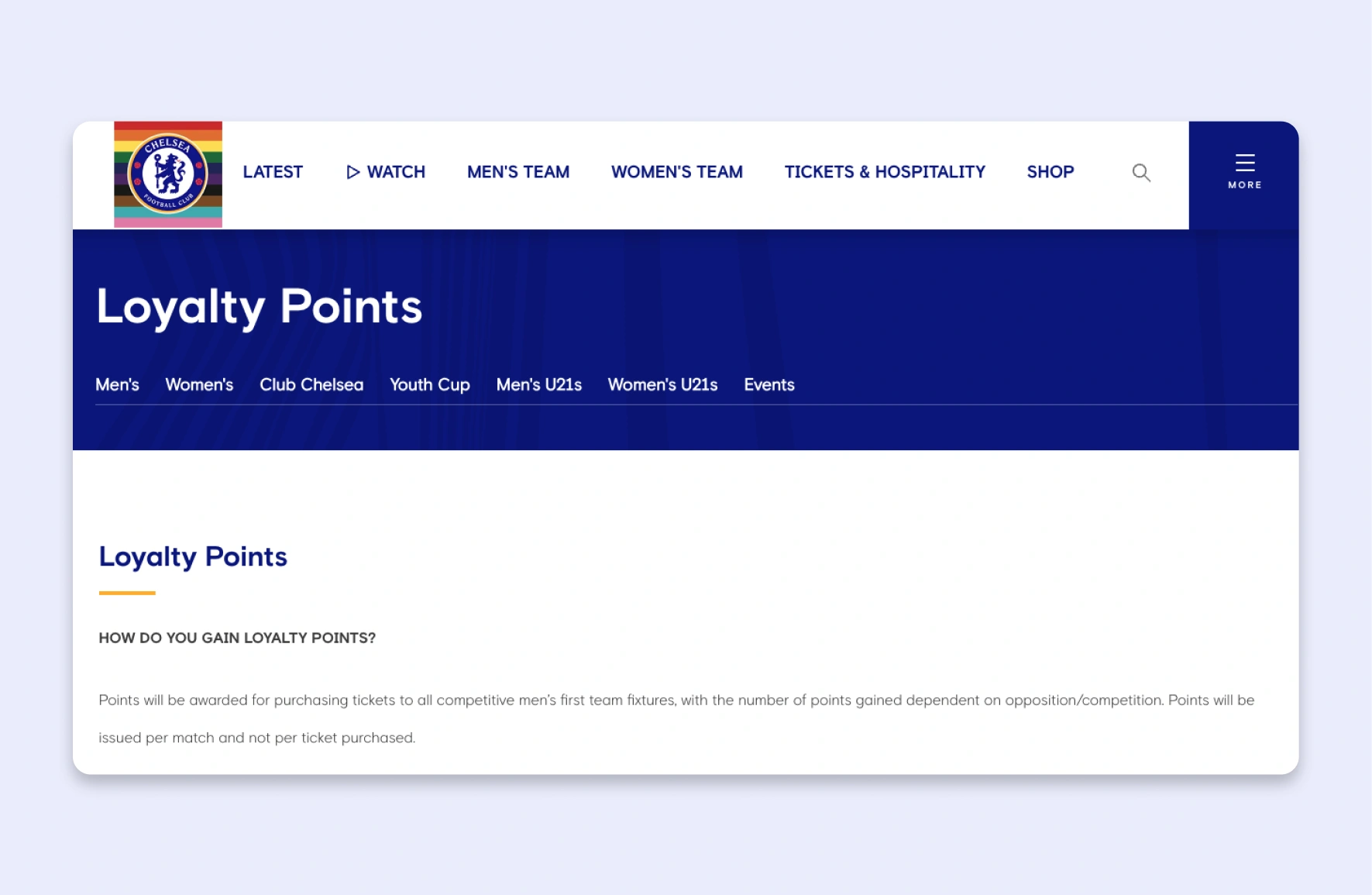
Best feature: the biggest rivalry games award the fewest points, while midweek cup ties and low-demand fixtures award the most.
Steal this: weight your rewards toward the behavior you actually need, filling the hard-to-sell nights, not the ones fans would attend anyway.
Dropped a straight cashback model in 2025 for a points system that rewards behavior as well as spend, branded as the "Road to Gold." Fans earn by arriving early, attending U23 games, voting for Player of the Month, and forwarding unused seats.
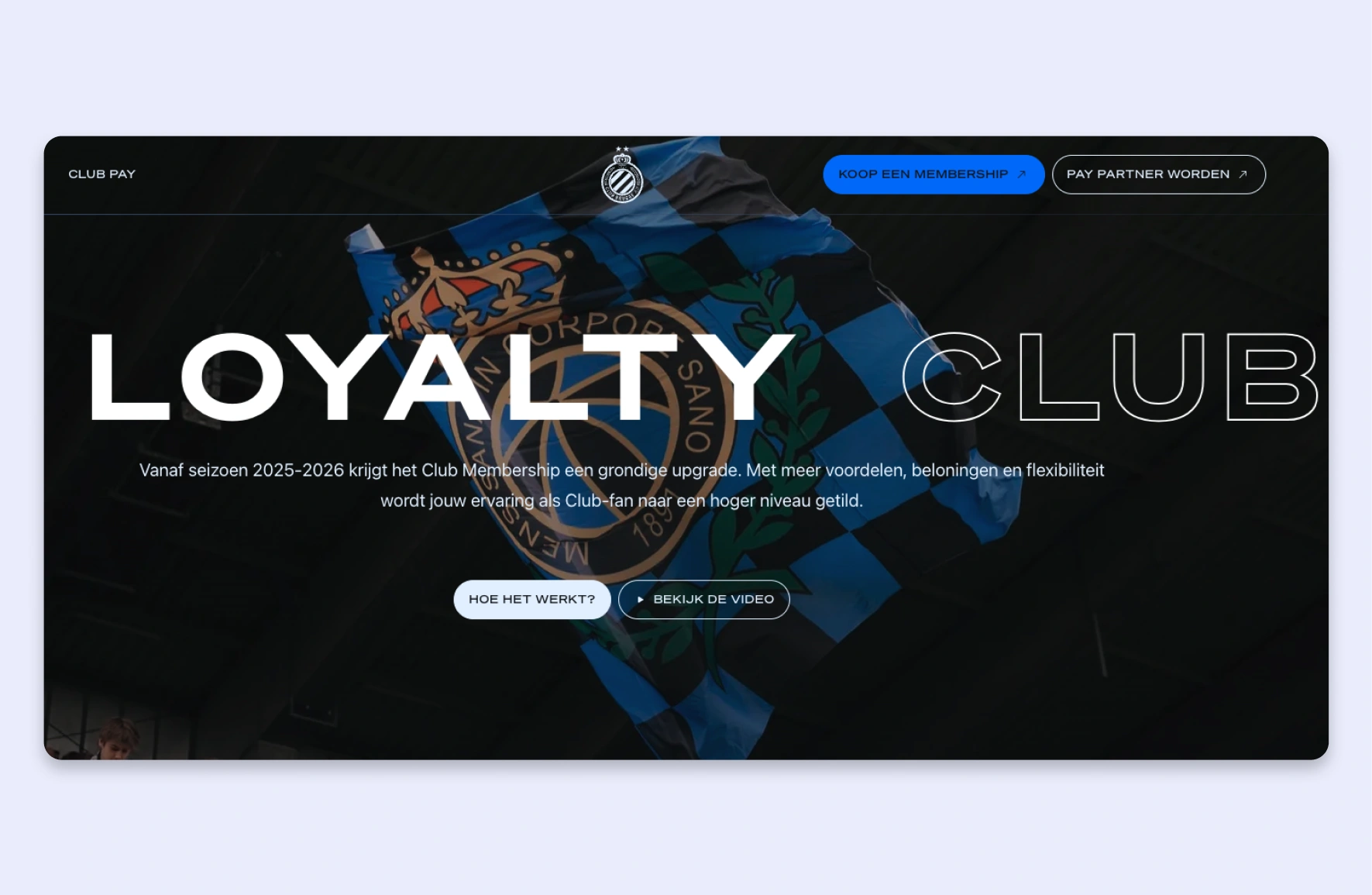
Best feature: a co-branded Club Pay debit card that earns points on everyday spending at partner brands like DAZN, dropping rewards straight into the fan's in-app wallet.
Steal this: loyalty doesn't have to stop at the final whistle. The strongest programs follow the fan into daily life.
Fans show up in the rain, sing the songs their parents sang, and forgive relegation in a way no retail brand has ever been forgiven for a missed delivery.
A loyalty program's only job is to notice that devotion and put it to work, not manufacture it, and never bury it under a discount aisle.


.svg)

