

Brands spend somewhere between ‘a lot’ and ‘an alarming amount’ on coupons and loyalty programs every year. And most of them can't tell you whether any of it worked.
And…that's an incentive economics problem.
Incentive economics is pretty simple: it's figuring out whether your promotions are actually working.
More specifically, it's the study of how incentives (coupons, points, referrals, gift cards, bundles, cashback) change what customers do, and what that costs you.
Economists use the term differently. They talk about how financial rewards change buying patterns across whole economies. The version that matters for brands is simpler: is this incentive changing behavior, or are we paying for what would have happened anyway?
Most brands use "incentive" and "discount" like they mean the same thing. They don't. Coupons, loyalty points, referral rewards, gift cards, and bundles all work differently and they all cost you differently.
These are the most common type. Customers understand them instantly, they're easy to run and measure. They're also the easiest to misuse.
The basic idea: you give up some margin, you get a purchase in return. The catch is whether you actually needed to give anything up.
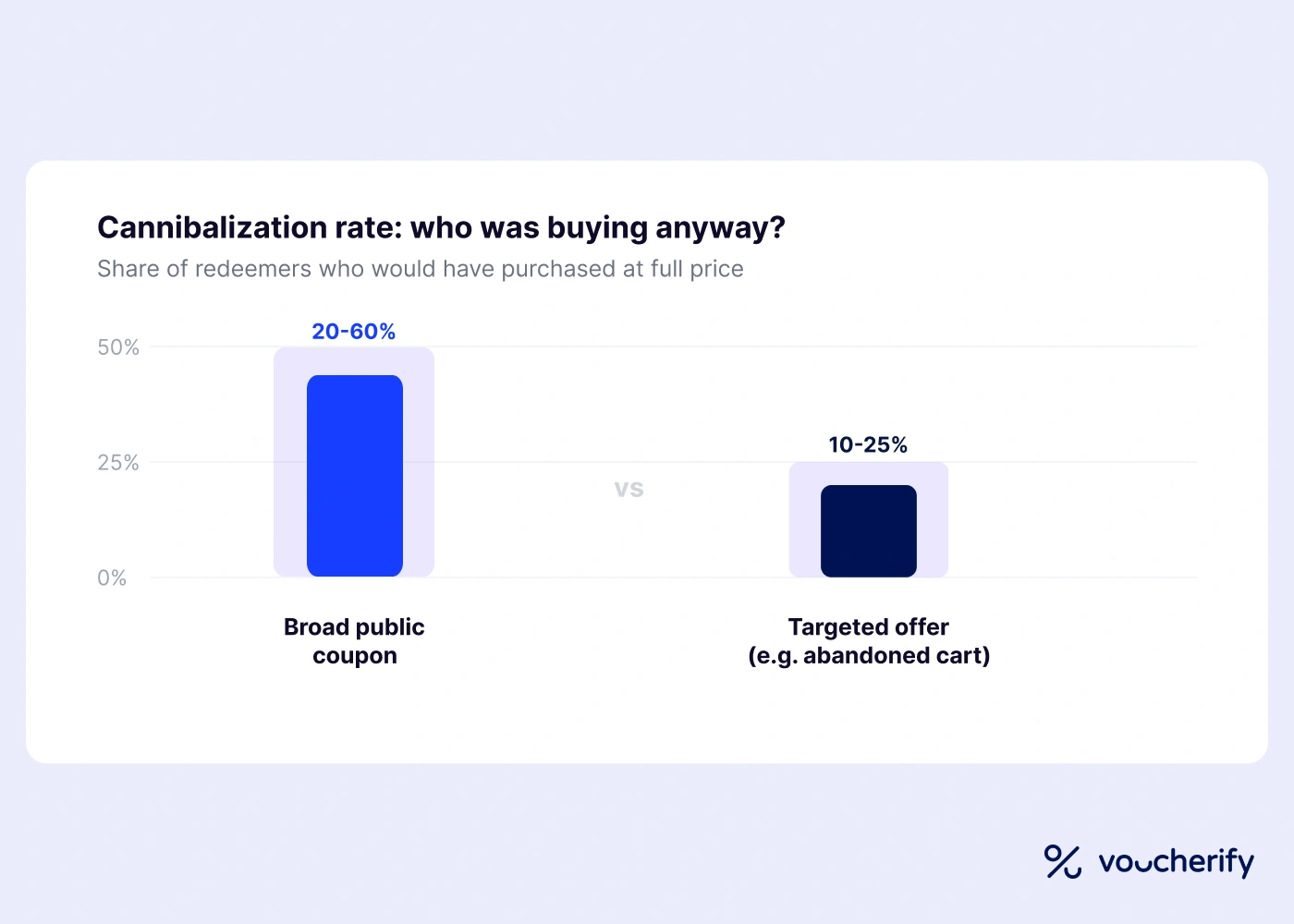
Research shows that broad coupons have cannibalization rates of 20-60%. That means a big chunk of people redeeming your coupon would have bought anyway, at full price. Targeted offers (like abandoned-cart codes) bring that number down to 10-25%. So the most important variable in coupon economics is who gets it.
Margin also depends a lot on your industry. A 20% discount on a 70% gross margin product? Painful but survivable. The same discount on a 35% margin product wipes out more than half your profit per order.
Learn more: The true cost of discounting
These work differently from coupons because you don't pay the cost upfront. When you issue loyalty points, you're making a promise to spend it later, when the customer actually redeems.
And a lot of them never do. Industry redemption rates typically sit between 15-30%. So a big portion of points issued never turn into real costs.
That said, the loyalty points liability is real. For airlines, hotel chains, and big retailers, the value of outstanding unredeemed points can be hundreds of millions of dollars sitting on the balance sheet.
Knowing how much you've issued, what it'll cost when people cash in, and how to set earning limits and expiry rules that keep the program from blowing up, that's a whole discipline on its own.
Referral programs look great on paper. Getting a new customer through a referral is usually way cheaper than paid ads. And referred customers tend to stick around longer, they came in through someone they trust.
Where it breaks down is when the reward is too expensive relative to what that new customer is actually worth. If the referral bonus costs you $40 and the referred customer churns after one order, you lose money. The program only works if the customers it brings in enough lifetime value to cover the reward.
These are the best incentives for protecting margin. Instead of cutting the price, you make the offer feel more valuable. A free gift with purchase or a bundle deal makes customers feel like they're getting more, not paying less.
The economics come down to what the value-add actually costs you. A sample with high perceived value but low unit cost is a great deal. A substantial free item that eats into margin is just a discount in disguise.
Incentives mess with how people think. That means psychology matters just as much as math. Here’s what you should know:
A campaign can show +30% revenue and still cost you money. How? Because the discount eats into margin on every order, including orders from people who would have bought anyway. Revenue goes up, but profit goes down. Most promo dashboards only show you the first number.
This is the most expensive mistake in promo measurement. Promotion runs, sales go up, team celebrates. But did the promotion cause the sales or were those sales going to happen anyway?
The fix is holdout groups: a set of customers who don't see the promotion, so you can compare their behavior against the group that did. It feels uncomfortable to withhold an offer from people who might have used it. But it's the only way to know whether you're actually making money.
Learn more: Incentive experimentation
If most of your promo redeemers are people who buy from you all the time, you have a problem. They were going to buy anyway, you just paid them not to pay full price.
Discount mechanics should go to customers who need a nudge. Reward mechanics should be tied to new or incremental behavior
Discounted purchases get returned more. When something costs less, people think less before buying. In fashion, return rates during promo periods can run 25-35% higher than normal.
Gross revenue at checkout is not the number that matters. Net revenue after returns is. If you're not modeling returns into your promo economics, your numbers are too optimistic.
The biggest lever in incentive economics isn't how big the discount is or how many points you offer. It's who gets the offer (and who don't!). The same 15% coupon sent to a customer on the fence versus one who was already going to buy produces completely different results (and completely different costs). Targeting based on purchase history, engagement signals, cart behavior, or segment is what makes an incentive create value instead of just giving it away.
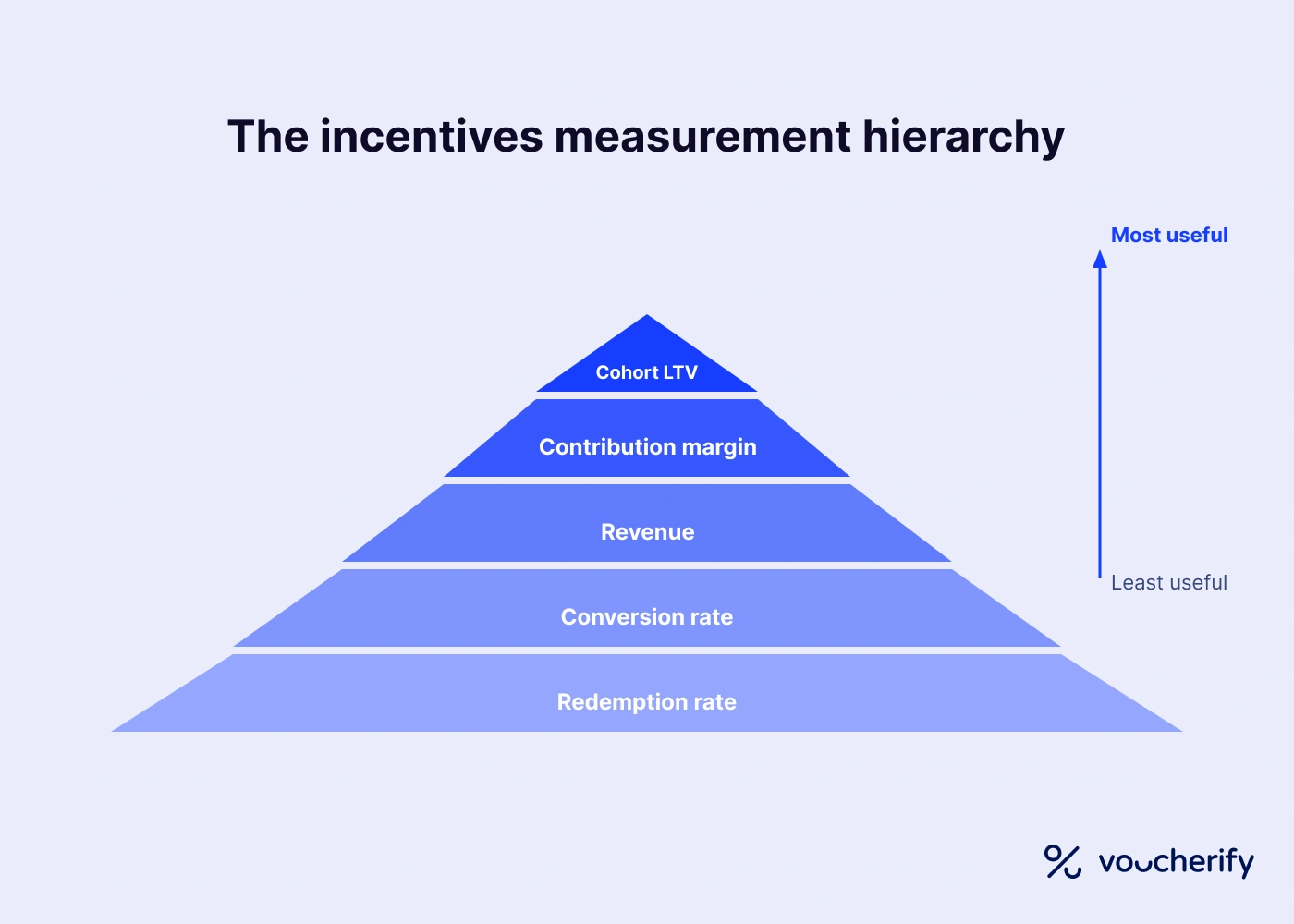
You can't improve on what you don’t know. That means holdout groups, A/B structures, and looking at contribution margin, not redemption counts. It means tracking promo analytics at enough detail to compare campaign variants, segments, and cohort behavior over time.
The brands that get this right don't run promotions as isolated events. They run them as a series of experiments, each one designed to answer a specific question about what drives behavior and what it costs. For example, Blacklane doesn't send a voucher and hope. They run sequenced incentive journeys that test which mechanics actually drive repeat trips. That's incentive economics at scale.
Learn more: How Blacklane uses reward experimentation to drive repeat bookings
Coupons and discounts work for acquisition, re-activation, and competitive defense. They're expensive for customers who are already buying regularly. Points and tiers work best for building frequency over time, but they need careful liability management. Referrals work when the customers they bring in are actually worth more than the reward costs. Bundles and value-adds protect margin better than discounts, but take more design work upfront.
The mistake is picking one type and using it everywhere.
If there’s just one thing you’ll take away from reading this piece is this: is this incentive changing behavior, or are we paying for what would have happened anyway?
If you can answer that confidently for every campaign type you run, you're doing incentive economics. If your measurement stops at conversion rate and redemption count, you're running on faith.



.svg)

