By clicking “Accept”, you agree to the storing of cookies on your device to enhance site navigation, analyze site usage, and assist in our marketing efforts. View our Privacy Policy for more information.
Your preference will be stored for this browser and device. If you clear your cookies, your preference will be forgotten.
How to run affiliate coupons without losing control?
Julia Gaj
May 15, 2025
Affiliate coupons only work at scale if the guardrails are built into the promo engine, not into a spreadsheet.
Unique, rule-bound codes per affiliate give you clean attribution and clean economics.
Table of contents
Affiliate discount codes are one of those ideas that sound simple and then quietly wreck your margins if you don’t set guardrails.
On paper, it’s great: give influencers or partners a unique code, track their sales, and only pay when they deliver. In practice, codes leak, coupon sites scrape them, affiliates bid on your brand terms, and suddenly half of your existing customers are buying with a discount you never budgeted for.
This post is about the practical side:
How affiliate discount codes actually work?
Where they typically go wrong (margin leakage, abuse, channel conflict)?
How to set them up in Voucherify so you have proper safety nets?
I’m going to assume you’re past the "what is affiliate marketing" stage and care about logic, tracking, and margin control behind affiliate codes.
What are affiliate discount codes, really?
An affiliate program is a deal where partners (publishers, influencers, creators, comparison sites, etc.) earn a commission for bringing you sales or leads. They usually get a:
Tracking link (for attribution)
Discount code (for the end customer).
An affiliate discount code is just a normal promo code with two extra jobs:
It carries attribution. You can see which affiliate drove which orders.
It encodes economics. The discount is part of the cost of the affiliate channel, on top of any cash commission.
In a healthy program, affiliate codes:
Are unique per affiliate or per affiliate + campaign.
Have clear rules (who can use them, how often, on what products).
Are easy to report on: “Affiliate A drove X orders, Y revenue, Z discount cost.”
In a messy one, every affiliate is using the same SUMMER10 and you’re arguing about who gets paid.
Where affiliate coupons usually go wrong
You’ve probably seen at least one of these in the wild:
1. Margin leakage
You intended: “10% off for new customers from influencer X.” You got: coupon sites indexing the code, existing customers stacking it with other promos, partners competing with your own paid search. Profit per order quietly shrinks.
Typical root causes:
No min order value / product restrictions.
No per-customer redemption limits.
Code category allows stacking with other discounts.
No per-affiliate cap or budget.
2. Coupon abuse & fraud
Examples:
“Test” affiliates generating fake orders to hit milestones.
Code shared in closed deal groups well beyond the intended audience.
Same customer spinning new accounts to reuse the benefit.
If you can’t see redemptions per code, per customer, and per time period, this stuff is hard to catch.
3. Channel conflict
Classic scenario:
Your CRM team runs a targeted 25% win-back.
An affiliate runs a general 20% code.
Customer is eligible for both, checkout logic is unclear and you’re over-discounting or attributing the order to the wrong channel.
Without clear promo priorities and validation rules, affiliate codes can cannibalize better-targeted, higher-ROI campaigns.
4. Compliance & brand safety
You also have to worry about:
Proper disclosure (affiliates marking content as sponsored/affiliate).
Data privacy.
Affiliates using shady tactics or misrepresenting your offer.
The tech can’t fix ethics, but it can make sure you see what’s happening and can cut off bad actors fast.
What a strong affiliate coupon stack looks like
Before we talk Voucherify, let’s define the desired properties of your setup. A good system lets you:
Bind each code to a specific affiliate and rule set, not “apply everywhere.”
Protect margin with minimum order values, product/category restrictions, caps on redemptions and total discount value, and more.
Run reporting per affiliate: revenue, discount cost, net margin, refunds, abuse signals.
Change rules without reissuing codes when you learn something (e.g., shrink discount, limit products, turn off stacking).
Voucherify gives you most of this out of the box, the trick is to wire it up with a clear model instead of random one-off campaigns.
Designing affiliate discount codes in Voucherify
Voucherify is campaign-based: you create campaigns that issue vouchers (codes) with shared behavior and attach validation rules to control eligibility and limits. For affiliates, you’ve got two main patterns.
1. One campaign, many unique codes
Use this when all affiliates share the same discount logic (e.g., “10% off, new customers only, non-stackable”), and you just need separate codes per affiliate for tracking and payout.
How it looks:
Campaign type: Discount coupons.
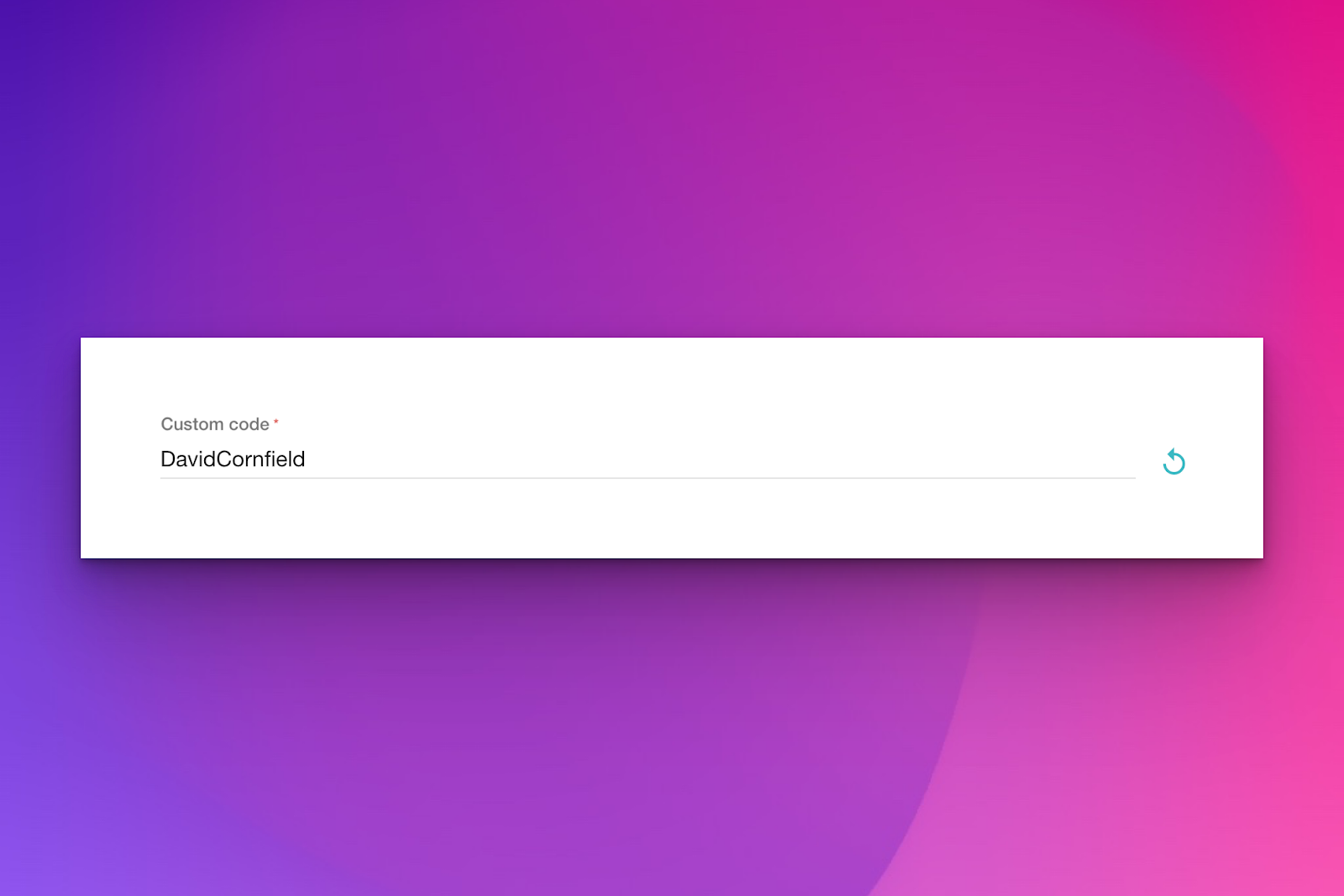
Code settings: pattern like AFF_{{affiliate_name}}_##.
Affiliates: each gets one or more codes from that campaign, all using the same rules.
You can generate a batch and export or push them via API to your affiliate network or directly to partners.
2. Treat affiliates as “referrers” in a referral campaign
Use this when you want tiered rewards for affiliates based on performance and automatic tracking of successful referrals and milestones.
Here, you set up a single-sided referral campaign where:
Each affiliate is a referrer with their own code.
Every successful order with that code increments their referral counter.
Tiers define when they earn rewards (gift cards, discount vouchers, physical rewards, etc.).
3. Putting the safety net in place
Here’s where we address the margin-leakage horror stories. Voucherify’s validation rules are where you say “yes, but only if…”. They can be attached to campaigns, individual vouchers, or promotion tiers. For affiliate codes, I’d always consider:
Discount structure and max value.
Order and customer conditions.
Redemption limits.
Stacking & promo priority.
4. Measuring margin and catching leakage
Affiliate performance is not just “revenue per code.” You care about net margin after discounts and commissions. In practice, you want to be able to answer:
Which affiliates drive profitable orders, not just volume?
How much discount cost did each affiliate’s codes create this month?
Are certain codes suspiciously overused compared to their audience size?
What’s the incremental lift vs. customers who would have bought anyway?
5. Governance: choosing affiliates and shutting things down
Tooling aside, a few non-technical things matter a lot:
Vetting affiliates. Don’t hand out codes to anyone with a follower count; check how they promote other brands.
Clear T&Cs. Spell out where they can share the code (their channels vs public coupon sites), how commission works, what happens if you see abuse.
Fast kill switch. Be ready to disable a specific code, lower the discount, or pause a campaign without breaking your checkout flow.
Summary
Custom affiliate discount codes can be a great CAC lever if you treat them as part of your promotion system, not a side project that lives in someone’s spreadsheet.
The core ideas:
Use unique codes per affiliate so attribution is obvious.
Decide whether your affiliates behave like discount-code owners (Pattern A) or referrers in a tiered program (Pattern B), and model that cleanly in Voucherify.
Always look at net margin, not just revenue, when you look at affiliate performance.
Do that, and affiliate coupons stop being scary and start behaving like a controlled, testable part of your promo stack.
FAQs
How do I stop affiliate discount codes from leaking and hurting my margins?
Use strict validation rules: minimum order value, product restrictions, non-stacking behavior, per-customer limits, and a cap on total redemptions. These safety nets ensure leaked codes can’t be exploited at scale, and you can instantly deactivate or modify any code in Voucherify without breaking the campaign.
Why give each affiliate their own discount code instead of using one shared code?
Unique codes give you clean attribution and clean economics. You can see revenue, discount cost, refunds, and net margin per affiliate, and adjust rules or limits individually. Shared codes blur performance, inflate payouts, and make it impossible to spot abuse or underperforming partners.
Julia Gaj
Product Marketing Manager @Voucherify
Shapes how Voucherify talks about incentive optimization, from positioning and competitive narratives to campaign launches. Obsessed with modern marketing mechanics and what actually moves pipeline.
Notes on incentives, by Mike (our CMO)
Hot takes on loyalty & incentives.
Product updates that are actually helpful.
Monthly zodiac sign advice for your incentive strategy.
I don’t really get what Mike does, but if it helps people stop sending those awful ‘last chance!’ emails, then I’m all for it.






.svg)

