

Promotions can drive a 300% lift in conversions. They can also eat into your margin for years while everyone in the team assumes they're working.
The difference between those outcomes is whether the right offer reached the right person at the right moment, with the right rules behind it. That's what promotion marketing is about: using incentives to move specific people to specific actions, with enough visibility to know whether it worked.
Promotion marketing is the use of incentives to drive customer actions, like first purchases, repeat orders, referrals, sign-ups, or anything else you'd like.
It's worth separating from marketing: marketing builds awareness and interest, while promotion marketing converts that interest into action. Done with precision, it has a measurable ROI. Done carelessly (generic discounts pushed to everyone), it trains customers to wait for sales and compresses margins.
The marketing mix, introduced by Neil Borden in the 1960s and crystallized into the 4 Ps framework, groups marketing into product, price, place, and promotion. This structure maps nicely to the questions brands face: what are you selling, at what price, through which channels, and how are you persuading people to buy?
Two distinctions worth keeping clear: promotion and advertising are not the same thing. Ads build brand awareness over time. Promotional marketing drives transactions. You can run ads that feature a promo offer, but the promo mechanics are doing seperate work from the brand message.
Marketing frameworks typically identify several main promotional methods. Each maps to different goals:
As a promotion engine powering 350+ brands for over a decade, we've seen what actually works and what just looks good in a brief. Here are the promotion types that deliver:
A first-purchase incentive targets the highest-intent moment in the acquisition funnel: someone has found your brand, considered it, and registered. Common formats include percentage off the first order, free shipping, loyalty points on signup, or a gift with purchase bonus.
Whoppah, a Dutch marketplace for second-hand design furniture, saw a 35% conversion lift within 14 days of launching a targeted welcome promotion through Voucherify.
One thing worth saying plainly: the "sign up for our newsletter and get 10% off" mechanic is lazy, and it's costing brands more than they realize. Yes, it grows your list, but it fills it with people who wanted a discount, not your product. You end up with a large, unengaged base and a segment of customers who'll never pay full price.
What works better for long-term brand health is a second-purchase incentive (convert the trial buyer into a habit) or a small surprise added to the first order (a sample, a handwritten note, a bonus product).
Baymard Institute's research puts average cart abandonment at around 70%. A triggered promotion (sent a few hours after abandonment, not immediately) gives customers a genuine reason to return without rewarding intentional cart-padding. The timing gap matters! Instant discount codes teach customers to abandon carts on purpose to trigger the offer.
ecoATM, a kiosk-based electronics buyback network, drove a 20% conversion uplift from a cart abandonment bonuses.
For more on what works and what to avoid: cart abandonment promotion strategies.
Referral programs turn satisfied customers into an acquisition channel. Two-sided structures (where both the referrer and the new customer receive a reward) consistently outperform one-sided approaches, because both parties have a reason to act.
.webp)
The results when these programs are set up well are significant. Tourlane hit 333% of their referral program target using a two-sided structure built with Voucherify and Braze. Taxfix, a tax-filing platform, saw a 95% lift in referral participation and an 11% lift in tax submissions from a similarly structured program. PartsAvatar, an auto parts retailer, reached 150% of their referral targets within two months and recorded a 15% overall sales lift.
For setup guidance: how to build a referral program.
Coupons are among the oldest promo tools and still one of the most effective when targeted correctly. The key word is targeted: a unique code sent to a specific segment based on behavior is a different mechanism from a public coupon broadcast across the internet and screenshot-shared beyond the intended audience.
Subito, an Italian online marketplace, tested promo codes across different customer segments and found that codes increased the conversion rate on paid visibility options by 37%.
Buy-one-get-one promotions lift order size, encourage product trial, and help move complementary inventory without a flat discount. The pairing logic matters a lot! A BOGO on genuinely complementary products feels like a benefit, while BOGO on unrelated items reads as clearance.
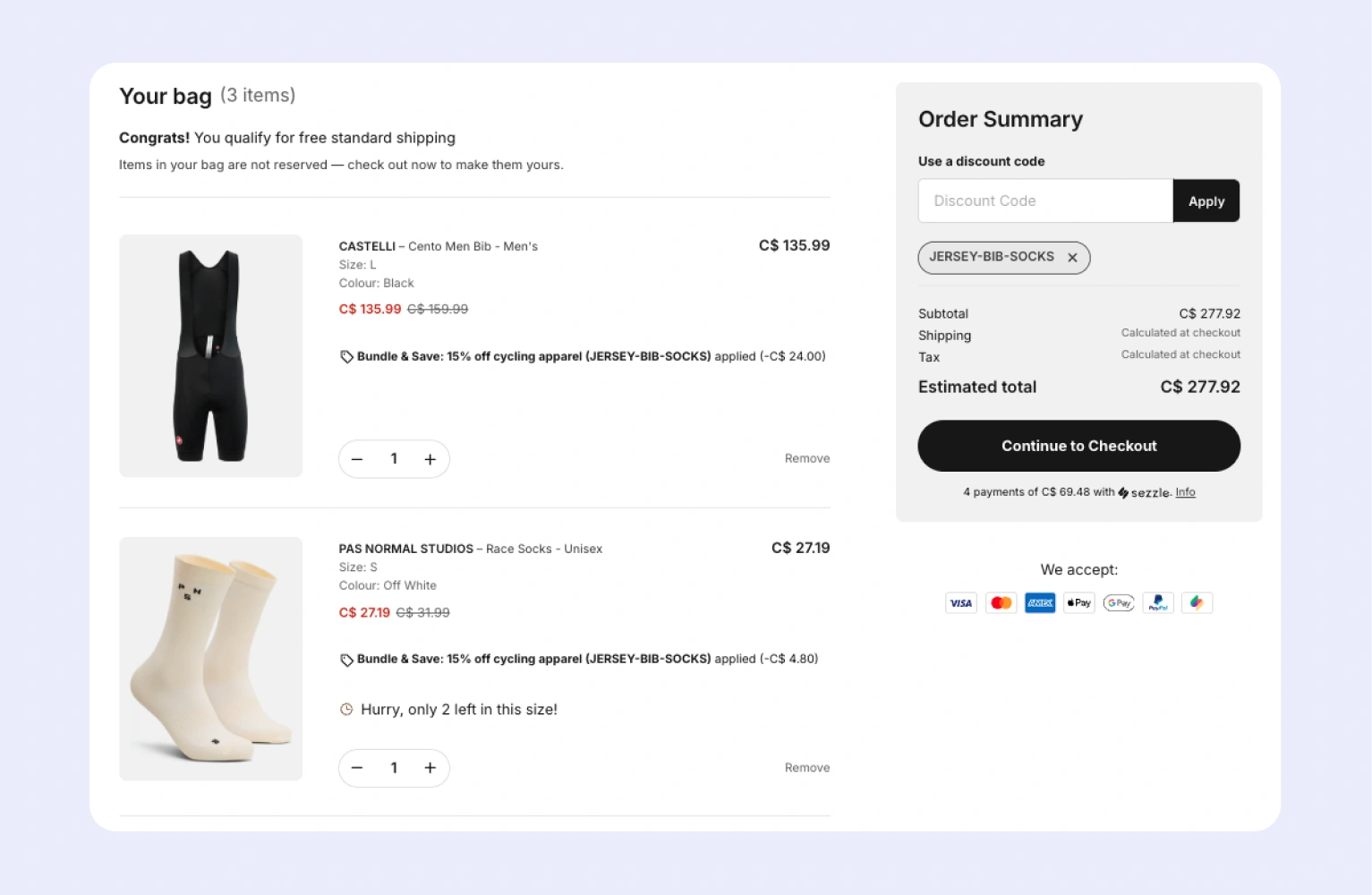
Product bundling follows the same principle: the bundle has to feel like a deal the customer couldn't assemble themselves for the same price.
Time pressure changes buyer behavior in ways that permanent discounts don't. The tradeoff: urgency effects diminish if you run them constantly. Flash sales work selectively, with real time limits, not rolling "ends soon" countdowns that reset every 24 hours.
Seasonal promotions align offers with moments when purchase intent is already elevated: Black Friday, back-to-school, end-of-season clearance, key holidays. Customers expect deals, so the promotional message doesn't require as much convincing. But at the same time, everyone is competing simultaneously. Differentiate through targeting and offer design, not just discount depth.
Dormant customers are usually cheaper to reactivate than acquiring new ones as they already know your brand and have purchased before. A targeted re-engagement offer tied to a product category they've previously bought from converts better than a generic "we miss you" email with a flat 10% off.
.webp)
Trainline, the UK rail booking platform, ran incentive experiments with Voucherify and Braze that delivered 6x higher conversion rates compared to blanket offers.
Gated promotions restrict access to a specific group: loyalty members, trade buyers, students, healthcare workers, employees of a partner company. The exclusivity is part of the value as customers who qualify feel recognized rather than just marketed at.
.webp)
Beryl, a UK cycle-hire company, runs two clean examples. During COVID-19, they offered free rides to NHS and key workers, using Voucherify to gate eligibility by email domain and location and issuing custom voucher codes with free minutes for workers without a unified email domain. They also offer students a 25% discount on available schemes, gated the same way.
Standard win-back offers ("here's 15% off, please come back") work. Personalized win-back works better. When an incentive is tied to a customer's specific purchase history, it converts at a higher rate than a generic code.
CarParts.com used personalized incentives to reduce promotional margin loss by 40% while improving customer engagement by 35% and cutting time-to-market for new campaigns by 90%. The margin result is the one that matters most: personalization doesn't just improve conversion, it reduces the cost of achieving it.
A promo campaign that looks like a revenue win can quietly destroy contribution margin and most teams don't find out until the finance review. There are four patterns worth knowing.
For the full breakdown (including a calculator): The true cost of discounting: 4 margin killers hiding in your last campaign.
The brands getting the most out of promotion marketing aren't the ones running the most campaigns. They're the ones running the right offer for the right segment, measuring what actually happened, and iterating faster than the competition. That's less a creative challenge than an infrastructure one and it's a solvable problem.


.svg)


