

Most retention strategies are built on a fiction: that a well-timed discount is proof of a relationship. Well, it isn't – it's proof you noticed someone was leaving.
Those are different things, and the gap between them is exactly where brands are quietly bleeding out, because the average ecommerce retention rate sits around 30%, and the primary instrument most teams reach for is a "we miss you" email with 15% off, sent after the decision is already made.
It's a goodbye gift. And your most disengaged customers have figured out exactly when it arrives.
Ask ten marketers and you'll get ten slightly different answers. A discount. A loyalty reward. A personalized offer. A well-timed nudge. They're all right, and they're all missing the point.
A retention incentive is anything that gives an existing customer a reason to stay:
The mechanic matters, but it should not come first. You are not trying to acquire someone new. You are trying to give an existing customer a relevant reason to choose you again.
Timing. That's the whole problem.
Retention incentives fail because they arrive after the customer has already moved on emotionally. The discount doesn't win them back. It confirms what they already suspected: this brand wasn't paying attention until it was too late.
The signals were never missing. A skipped order. A login that stopped happening. Legacy systems don't act on any of that. They wait for the cancellation, then send the coupon.
And there's a meaningful difference between a brand that sends a win-back email three weeks after churn and one that catches a high-value customer going quiet and acts before they're gone. The first is damage control. The second is a retention incentive strategy.
There's a specific failure mode worth naming.
The brand has trained its most price-sensitive customers to disengage between promotions and the customers who would have returned anyway are now buying at a discount they didn't need.
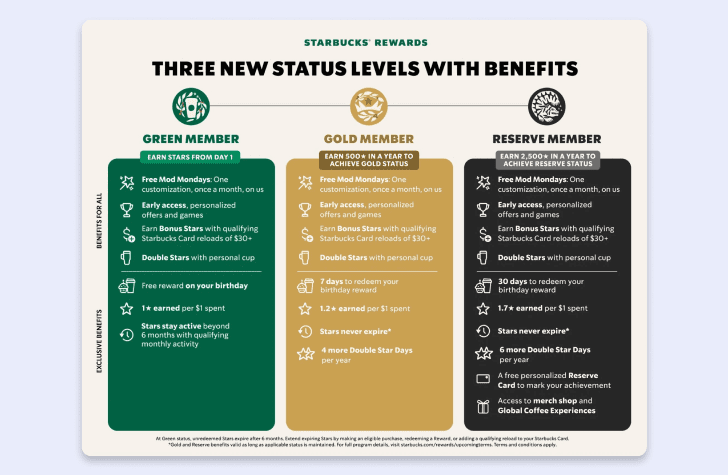
Starbucks spent most of 2024 in exactly this trap: leaning on offers to prop up transaction numbers while the underlying experience degraded. Brian Niccol's "Back to Starbucks" strategy, documented in SEC filings throughout 2025, made the diagnosis explicit: incentives had become a substitute for product and experience, not a complement to it.
By Q4 2025, after removing the surcharge on non-dairy milk, investing in service quality, and redesigning Starbucks Rewards around genuine relevance rather than points accumulation, the company delivered global comparable store sales growth for the first time in seven quarters.
The retention incentive structure changed because the philosophy changed first. That’s the lesson: fix what the experience is actually worth before deciding what incentive to put on top of it.
An offer tied to "it's been 45 days since your last purchase" beats a blanket quarterly promotion. An offer triggered by "this customer just browsed a category they've bought from before but didn't add to cart" beats both.
The relevance of a retention incentive is a direct function of its proximity to actual behavior. Calendar triggers are logistics. Behavioral triggers are strategy.
Not every at-risk customer needs the same offer. Some respond to free shipping. Some to modest cash-back. Some to early access or a first look at new product. Sending everyone the same retention incentive is cheap to operate and expensive to sustain.
McKinsey is direct on this: companies that excel at personalization generate 40% more revenue than average players. The gap between "20% off, everyone" and "free shipping, this segment; early access, that one" isn't just tactical. It's structural.
The customer retention programs that build genuine loyalty reward engagement, not just transactions: a product review, a referral, a completed profile. It's a relationship where the brand gives before it asks.
More than three-quarters of consumers use brand apps more frequently when offered personalized incentives or loyalty rewards. The brands capturing that behavior aren't running better promotions. They're running a better relationship.
Not all customers are equal at the point of risk. A customer who has made eight purchases in 18 months and gone quiet for 60 days is a different retention challenge than someone who bought once and never returned.
Effective retention incentive programs tier their response by customer value: high-value at-risk customers get the full treatment: a personal outreach, a meaningful offer, a direct relationship. Lower-value segments get a lighter touch. The economics have to work at both ends.
Win-back campaigns are usually the most expensive way to do retention. By the time you send the offer, the customer has already drifted away. Now you need a bigger discount just to get their attention again.
Proactive retention works earlier. It might be a loyalty reward sent just before someone usually reorders. A product nudge based on what they bought last time. Early access for a valuable customer whose engagement is starting to drop.
These offers do not feel like rescue attempts. They feel timely, useful, and relevant and that is the point.
A redeemed offer is not the same as retained customer. Someone can use a discount once and disappear again. That's basically a paid traffic with extra steps.
What you actually want to track: incremental retention rate among recipients vs. a holdout group. Repeat purchase rate at 30, 60, 90 days. Change in average order value post-incentive. Percentage of lapsed customers who returned and stayed returned.
If your current setup can't answer those questions, you're flying blind on whether your retention incentive strategy is working or just spending.
The shift happening right now is that retention incentives are getting precise. Instead of the same 20% off for everyone, leading brands are asking: what does this specific person respond to, and what's the minimum offer that actually changes their behavior?
That's a different question than "how do we get them back?" It asks about the individual, not the cohort.
Brands like Sephora, Adidas, and ASOS have already demonstrated this by firewalling discounts behind loyalty programs, turning retention incentives into a deliberate value exchange rather than a margin drain. Research shows 60% of enterprise brands plan to strengthen this integration in the year ahead. Siloed incentives are on the way out.
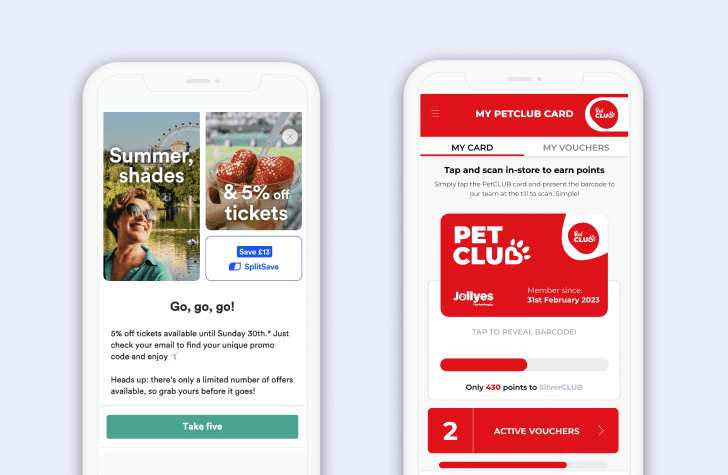
Jollyes (UK pet retail) built a loyalty program with 1.4 million members, 85% of transactions linked to the program, and annual churn below 10%. Not because they found a better email template, because their retention incentive infrastructure could respond to what customers were actually doing, not just what segment they were in.
CarParts.com cut time-to-market for new promotions by 90% and reduced promotional margin loss by 40%. Not by spending more on incentives, but by being able to test and optimize them faster.
Trainline ran targeted retention incentive experiments and saw 6x higher conversion rates compared to their previous approach.
Customers are increasingly shopping with AI assistance – tools that compare prices, apply coupons, and filter by loyalty status before a purchase decision is even made. The retention incentive that keeps a customer now needs to be surfaced at the right moment in the journey and in the right format for an AI agent to read and act on it.
An incentive that lives in a system an AI agent can't communicate with is invisible to a growing share of the purchase funnel.
Brands building retention incentive infrastructure today are either building it for how customers shop now and will shop in three years, or they're building something that will need a rip-and-replace when that future arrives. That's a strategic choice, even when it doesn't feel like one.
Review your last five retention campaigns honestly. What percentage of the incentives you deployed were sized based on what each customer actually needed to stay, rather than what was easiest for your team to configure?
If the answer is uncomfortable, it’s not because your team isn’t smart. It’s because the systems you’re using were built for something simpler than what customer retention actually demands.
Building a retention incentive strategy requires an incentive engine that handles real-time event logic, granular segmentation, A/B testing across offer structures, and validation rules that prevent the margin-destroying edge cases that make retention teams afraid to experiment.



.svg)


